Second-Story Deck Cost
$30–$90 /sq ft≈ 2× a ground-level deck
A second-story deck costs $30–$90/sq ft installed, averaging $40–$50 — about twice a ground-level deck. The extra money isn't the decking; it's the structure: taller posts on deeper footings, a mandatory stair flight ($2,000–$6,000), lateral bracing, guardrails on every open side, and slower work at height. By size, expect roughly $4,000–$5,000 for a 10×10 up to $16,000–$20,000 for a 20×20.
≈ 2×
vs a ground-level deck
$2k–$6k
per stair flight (required)
Permit + guard
required over 30″ high
Why an elevated deck costs about 2×
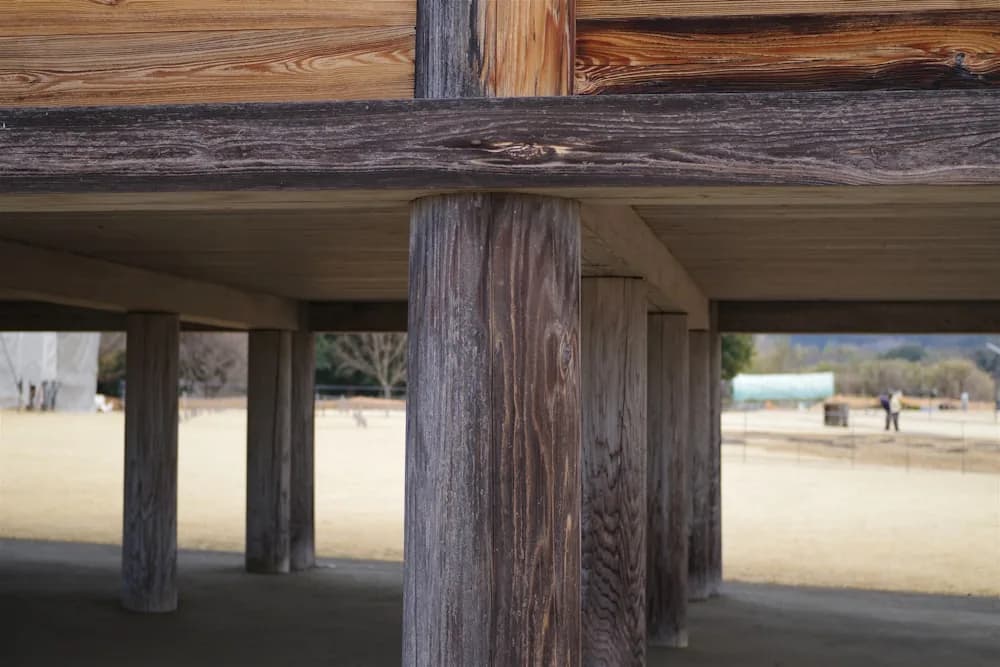
The cost lives under the deck: taller posts, deeper footings, and bracing you never see once the boards go down.
Taller posts + longer beams
A raised deck needs 6×6 posts sunk to deeper footings and longer beams — more lumber and bigger hardware than a deck sitting near grade.
Stairs are mandatory
You can't reach the yard without them. A code-compliant flight runs $2,000–$6,000, and a tall deck often needs a landing or a switchback — a cost a ground-level deck skips entirely.
Lateral bracing against sway
Height introduces sway, so elevated decks need diagonal knee bracing and hold-down hardware the ground-level version doesn't.
Guardrails on every open side
Once the surface is more than 30″ above grade, a 36″ guardrail is required on all open sides (IRC R312) — more rail, more posts, more labor.
Harder, slower labor
Working at height means scaffolding, more crew, and slower installation — figure 10–25% higher labor than a near-ground build.
Engineering + permit
Any deck over 30″ needs a permit, and tall or long-span elevated decks may need an engineer's stamp ($400–$800) for the lateral-load connection.
Cost climbs with height
Relative build cost vs a ground-level deck of the same footprint. Height drives structure, stairs, and labor.
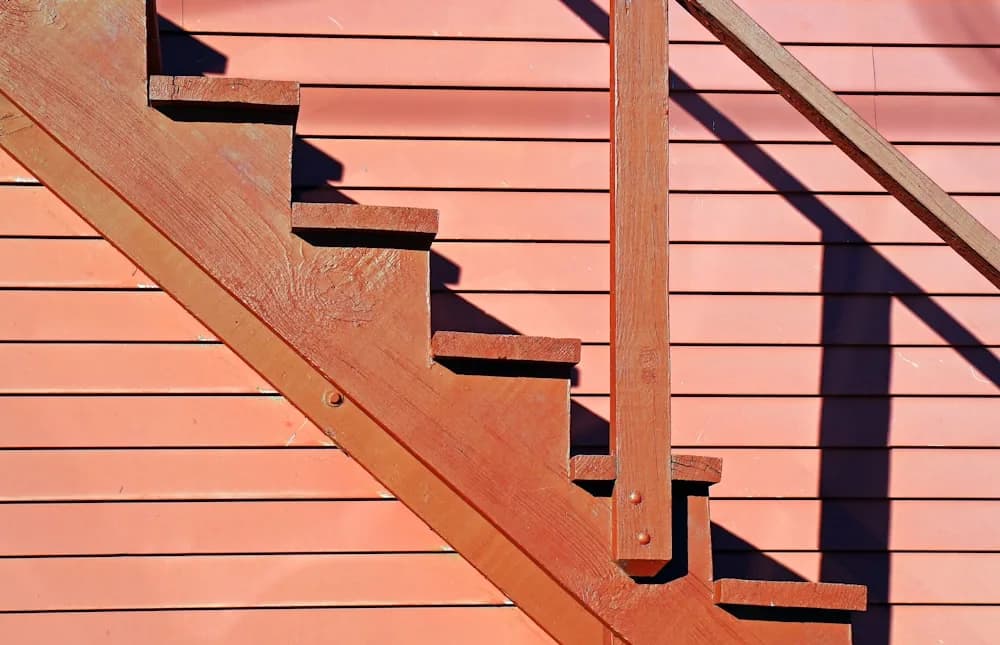
Stairs: the line item a ground deck skips
A single code-compliant flight runs $2,000–$6,000 — stringers, treads, risers, a graspable handrail, and its own footings. A tall second-story deck often needs a mid-run landing or a switchback, and every step is inspected for the IRC R311.7 rise/run limits. It's frequently the single most expensive component of an elevated build after the framing itself.
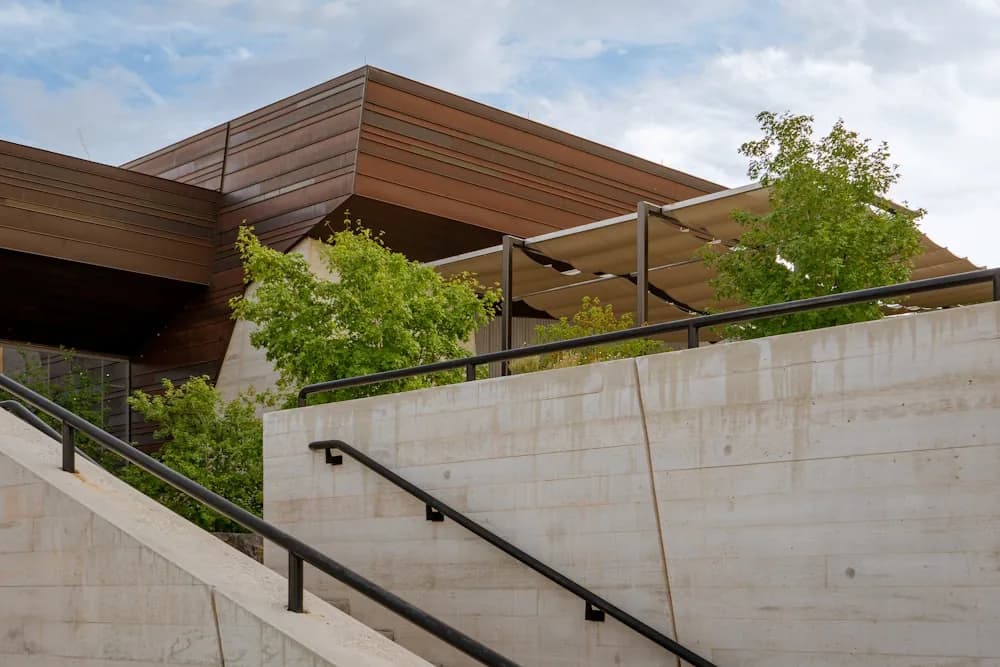
The code that drives the cost (IRC 2021)
- Guards — R312: required once the walking surface is more than 30″ above grade; minimum 36″ tall, a 4″ sphere can't pass through, and the top rail resists a 200 lb load. (Some states/IBC require 42″.)
- Lateral load — R507.9.2: two hold-down tension devices rated ≥1,500 lb each within 24″ of each deck end (or four at 750 lb) — the connection inspectors focus on, because ledger failure is the #1 cause of deck collapse.
- Ledger: minimum 2×8, fastened with lag screws or through-bolts and flashed — never nails.
Source: IRC 2021 (R312, R507.9.2, R311.7) and AWC DCA-6.
Second-story deck cost by size
| Size | Sq ft | Installed (elevated) | $/sq ft |
|---|---|---|---|
| 10×10 | 100 | $4,000–$5,000 | $40–$50 |
| 10×12 | 120 | $4,800–$6,000 | $40–$50 |
| 12×16 | 192 | $7,700–$11,500 | $40–$60 |
| 16×20 | 320 | $12,800–$16,000 | $40–$50 |
| 20×20 | 400 | $16,000–$20,000 | $40–$50 |
National averages incl. stairs, guardrails, and footings; large or 12 ft+ builds with engineering can reach $25,000–$70,000. Get local bids.
Price your elevated deck exactly
Set your size, height, material, and state — the calculator itemizes framing, footings, stairs, and railing:
Dimensions
Plan-view length × width.
IRC R312 requires a 36″ guardrail above 30″.
192 sq ft · Mid composite · 1.22× labor · 1.25× complexity
Project advisories · IRC 2021
Guardrail included (deck 96″ off grade)
IRC R312IRC R312 mandates a 36″ guardrail on open edges when deck height exceeds 30″. 40 lf priced at Mid composite tier.
Building permit included in budget
IRC R105Northeast typical permit fee is in the budget. Most jurisdictions require a permit for decks > 200 sqft, > 30″ above grade, or attached to the house.
Tall deck — 96″ off grade
IRC R507.9Above 60″, IRC R507 requires lateral-load anchors at every joist-to-house connection, deeper footings, and may trigger stamped-engineer review in some jurisdictions. Budget includes a 1.25× height multiplier; verify locally.
Hidden-fastener install premium baked in
Manufacturer specsMid composite uses hidden-fastener clip systems (Cortex / CamoClip / Trex Universal) — labor takes 25–30% longer than face-screwing PT. Already inside the tier's installed $/sqft band.
Cost breakdown
| Cost component | Share | Amount |
|---|---|---|
| Materials | 29% | $8,640 |
| Labor | 43% | $12,883 |
| Add-ons | 18% | $5,368 |
| Soft costs | 1% | $320 |
| Contingency | 9% | $2,721 |
| Total (high est.) | 100% | $29,932 |
Share of the high estimate. Switch tiers below to repaint the split.
National-median pricing (2026-Q1). Local prices vary ±15%. Materials line uses Mid composite tier; switch tiers to repaint the budget. Includes 10% contingency reserve on the high estimate.
Visualize your deck
Photoreal 3D · plan view · framing breakdown. Color matches your tier selection.
Project all-in
Same dimensions, different tier
tap to switchDIY savings
- Materials only: $8,640
- Estimated hours: 288 hr
- Skill required: advanced
Finance estimate
- Principal: $29,932
- Total interest: $6,474
- Estimate only — shop 3+ lenders.
Need exact board counts?
The Deck Material Calculator gives you a permit-ready bill of materials — every joist, hanger, fastener, and footing — validated against IRC 2021 span tables.
Estimates use 2026-Q1 national-median pricing (Home Advisor, Angi, RSMeans). Expect ±15% variance vs your local market. Always get 3 contractor bids before signing. This calculator is not a substitute for a licensed inspector or structural engineer.
People also ask
Second-story deck cost questions, answered.
Yes — roughly 2× the cost. A ground-level (floating) deck runs about $20–$25/sq ft, while a second-story deck runs $30–$90/sq ft, averaging $40–$50. The premium comes from taller 6×6 posts and deeper footings, mandatory stairs ($2,000–$6,000 per flight), lateral bracing against sway, guardrails on every open side, and 10–25% higher labor for working at height. The taller and longer-span the deck, the bigger the gap.
Almost always. If the deck is your only access to the yard, a code-compliant stair flight is required — and it's one of the biggest single line items on an elevated build at $2,000–$6,000 per flight. A tall second-story deck often needs a mid-run landing or a switchback, which adds cost. The only time you'd skip stairs is a balcony-style deck reached solely from inside the house.
Pressure-treated wood, at roughly $30–$45/sq ft installed for an elevated build. It's about half the cost of composite ($50–$80/sq ft up high) but needs re-staining every 2–3 years. Because so much of an elevated deck's cost is structural (posts, stairs, bracing, guards) rather than the decking surface, upgrading the boards to composite adds less to the total percentage-wise than it would on a simple ground-level deck.
Yes. Any deck more than 30 inches above grade requires a building permit in essentially every US jurisdiction, and it will be inspected for footing depth, guardrails (IRC R312), and the lateral-load connection to the house (IRC R507.9.2). Building without a permit risks a stop-work order, fines, and problems at resale. Permit fees typically run $150–$500 depending on project value.
Through a properly-flashed ledger board and a lateral-load connection. IRC R507.9.2 (2021) requires two hold-down tension devices rated at least 1,500 lb each, installed within 24 inches of each end of the deck (or four devices at 750 lb). The ledger must be a minimum 2×8 fastened with lag screws or through-bolts — never nails. A missing or failed ledger/lateral connection is the leading cause of deck collapses, which is exactly why inspectors focus on it.
Sources
Cost ranges: HomeAdvisor elevated-deck + Decks.com second-story-deck-cost data (2025–2026). Code: IRC 2021 R312 (guards), R507.9.2 (lateral load), R311.7 (stairs); AWC DCA-6 (ledger). National averages — always get local bids.