Deck Building Permits — IRC 2021 + State Rules
When you need a deck permit, what it costs, what gets rejected, and the IRC 2021 sections every inspector reads.
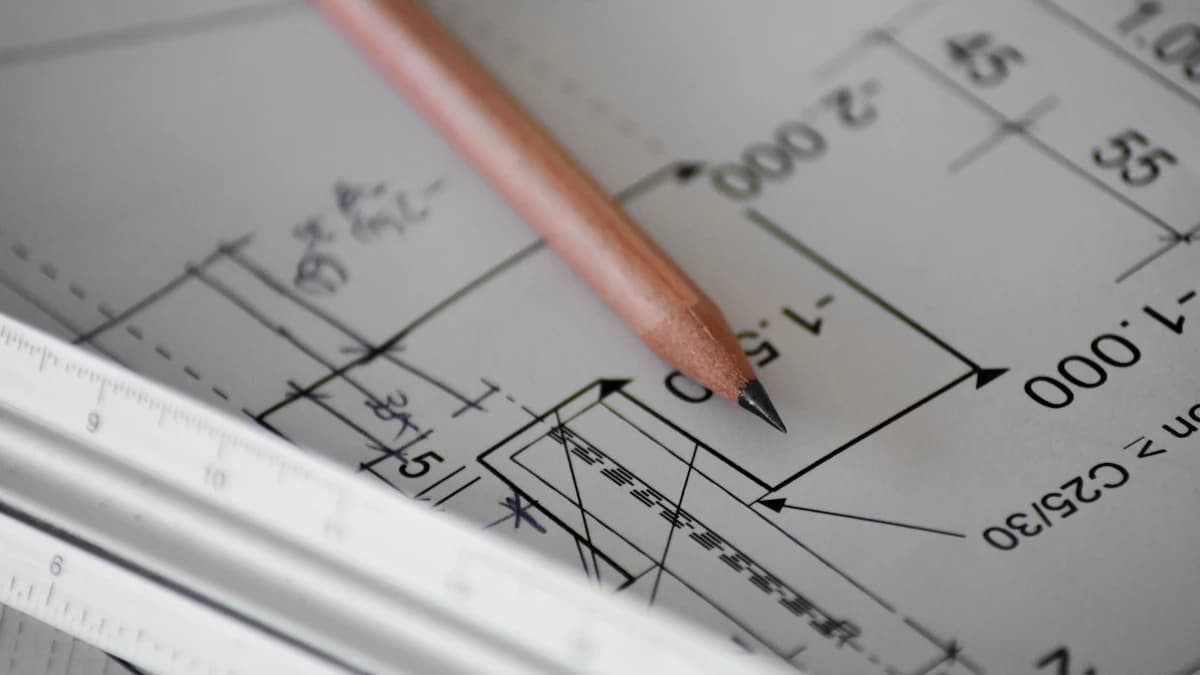
The single most common reason a deck fails inspection is that the homeowner skipped the permit. The second most common is the permit was pulled but the build doesn't match what was submitted. This guide walks through IRC 2021 R105's permit triggers, the typical fees in each US region, the application paperwork your jurisdiction will ask for, and the dozen things inspectors actually check on the final walkthrough. If you're DIYing or hiring a contractor, this is the document you tape to the saw before breaking ground.
When you need a permit
IRC 2021 R105 (ICC) triggers a permit requirement on any of these:
- Deck more than 30″ above grade (the 30″ threshold is also when a 36″ guardrail becomes mandatory under R312)
- Deck attached to a primary structure (i.e. ledger-bolted to the house)
- Deck larger than 200 sqft footprint
- Any new electrical for deck lighting (separate electrical permit on top of building permit)
- Roof or pergola integrated into the deck (triggers structural review)
If your deck is BELOW all four triggers — under 30″ off grade, freestanding (no ledger), under 200 sqft, no integrated electrical, no roof — most jurisdictions will let you build without a permit. Always confirm with your local building department since some AHJs have stricter rules.
Typical permit fees by region
Permit fees scale with project value (~1.2% in most jurisdictions). Regional baselines:
| Region | Typical fee | High-cost example | Low-cost example |
|---|---|---|---|
| Northeast | $200-450 | Boston suburbs $400-700 | Rural NH $200-280 |
| West Coast | $250-450 | SF Bay Area $400-650 | Eastern WA $200-300 |
| Midwest | $130-280 | Chicago suburbs $250-400 | Rural IA $130-180 |
| South | $120-280 | Northern Virginia $250-400 | Rural AL $100-150 |
On top of the building permit, expect a separate electrical permit ($50-150) if you're integrating deck lighting, and an HOA architectural-review fee ($50-300) in covenant-controlled communities.
What goes in the permit application
Most jurisdictions want the same 4-6 items, regardless of state:
1. Site plan
Plot drawing showing your house, the deck location, property lines, easements, and setback distances. Most AHJs want 5-10 ft setback from side property lines and 15-25 ft from rear. Hand-drawn is OK on residential additions; just dimension everything clearly.
2. Construction plan
Plan view (top-down) showing deck dimensions, joist layout (size + spacing), beam locations, post locations, and stair landing. Side elevation showing height + height of guardrails + stair details. Most homeowners can produce this in 30 minutes with a tape measure and graph paper.
3. Lumber + hardware spec
Joist size + species + grade (e.g. '2×10 PT SPF #2'), beam configuration (e.g. 'built-up 2-ply 2×10 PT'), post size + species (e.g. '6×6 PT'), all hangers and connectors with Simpson Strong-Tie or USP part numbers, footing diameter + depth + concrete spec.
4. IRC code references
Cite the IRC 2021 sections you're complying with: R507 (decks), R311.7 (stairs), R312 (guards), R403.1.4 (footings + frost depth). Some AHJs require you to reference the prescriptive table (R507.6 for joist span, R507.5 for beam span).
5. Lateral load anchor
IRC R507.9.2 mandates a lateral-load device at every deck-to-house connection — typically Simpson DTT2Z hold-downs, 2 per ledger. Show the device on your construction plan; failing to include it is the most common rejection reason.
Common rejection reasons
After 1,000+ residential deck reviews, AHJ rejection patterns are predictable. The top 10:
- No lateral-load anchor on attached decks (R507.9.2). Add 2× DTT2Z minimum.
- Joist span exceeds R507.6 prescriptive table for the species and spacing. Either tighten spacing (24→16″ o.c.), or upsize to next joist size (2×8→2×10).
- Beam span exceeds R507.5. Add a post (shorten the span) or upsize the beam (2×8 ply 2 → 2×10 ply 2 → 2×10 ply 3).
- Footing depth doesn't reach frost line (R403.1.4). Verify your jurisdiction's frost depth and add 6-12″ for safety bearing.
- Footing diameter undersized for soil bearing capacity (R507.3). Sandy soil 2,000 psf vs clay 1,500 psf vs rock 12,000 psf — diameter scales accordingly.
- Guardrail height too short — must be 36″ minimum residential (R312.1.2). Some jurisdictions require 42″.
- Baluster spacing — must reject a 4″ sphere (R312.1.3). DeckMath's baluster-spacing-calculator solves this exactly.
- Stair rise/run violates R311.7 — max 7-3/4″ rise, min 10″ run, every riser within 3/8″ of the others.
- No graspable handrail on stairs of 4+ risers (R311.7.8.1). 1-1/4 to 2″ diameter, 34-38″ above tread nosing.
- Ledger bolt pattern doesn't meet R507.9.1.3 — 1/2″ × 4-1/2″ lag bolts at 16″ o.c. staggered minimum.
The inspection process
Most jurisdictions schedule 2-3 inspections during the build:
Footing inspection
Before pouring concrete. Inspector verifies depth (frost line + bearing), diameter, soil bearing layer, and rebar (if required by spec). Schedule 24-48 hours after digging.
Framing inspection
Before installing decking. Inspector verifies joist size + spacing, beam configuration, lateral anchor, hangers, ledger bolts + flashing, post bases. THIS is where most failures happen — fix before installing decking or you'll have to remove boards.
Final inspection
After everything is installed including stairs + railing + lighting. Inspector verifies guardrail height, baluster spacing, stair geometry, handrail, and any electrical. Brings the 4″ sphere gauge for guardrail openings.
Special situations
HOA architectural review
Many planned communities require architectural-committee approval BEFORE the building permit. Process is typically: submit drawings + material samples, wait 4-6 weeks, get conditional approval, then apply for building permit. Don't skip this — HOAs can force removal of unapproved decks.
Hurricane uplift connectors
Florida, Texas Gulf Coast, Louisiana coastal parishes, NC Outer Banks: building codes require Simpson H1, H2.5A, or HGAM10KT hurricane connectors at every joist-to-beam and post-to-beam connection. Adds ~$200-400 to the hardware line.
Seismic anchoring
California (especially Bay Area) and Western Washington often require additional seismic anchoring beyond IRC baseline — usually Simpson SDS structural screws + tie-downs. Verify with your local AHJ; can add $300-600 to the build.
Coastal saltwater
Within 5 miles of saltwater: switch to 316 stainless screws, hangers, and post bases. Galvanized steel will rust through within 3-5 years in salt-air environments. Adds 30-40% to the hardware line.
Critical Area / waterfront
Maryland Critical Area Commission, Virginia Bay Act, Florida CAFRA — waterfront properties have additional environmental review. Setback minimums are larger; some materials may be restricted. Add 4-12 weeks to the permit timeline.
Hiring a contractor — permit responsibility
Two ways the permit can be pulled:
Contractor pulls the permit
Contractor is the 'contractor of record' — legally responsible for the build meeting code. If the inspection fails, contractor's name is on the violation, not yours. Costs typically rolled into the contract; expect contractor to mark up the permit fee 10-25%.
Homeowner pulls the permit
YOU are the contractor of record. If something fails, your name is on the violation. Most contractors will discount the contract by the permit fee + markup if you pull it yourself, but you accept the legal responsibility. Only do this on simple builds where you're confident in the contractor's work.
Frequently asked questions
Do I really need a permit for a deck?
Almost certainly, because the IRC triggers are easy to cross. A permit is required if the deck is more than 30 inches above grade, if it is attached to the house by a ledger, if its footprint exceeds 200 square feet, if it adds new electrical work, or if a roof or pergola is integrated into it. Any one of those is enough. A deck that clears all of them, meaning low, freestanding, under 200 square feet and with no wiring or roof, can often be built without a permit, but confirm locally because plenty of jurisdictions are stricter than the model code. The cost of guessing wrong is not theoretical: stop-work orders, fines of $500 to $2,500, a demand to remove or retroactively permit the structure, and a permit-history gap that surfaces when you sell the house.
How long does the permit process take?
Plan on one to four weeks from submission to issuance for a residential deck. Small jurisdictions are often quicker than that, while major metros such as Boston, New York and San Francisco can take six to eight weeks, particularly in spring when everyone applies at once. If you are in a covenant-controlled community, add the architectural review first, which typically runs four to six weeks and has to be approved before you apply for the building permit at all. That sequencing catches people out every season. The way to keep the calendar from becoming the project's bottleneck is to use the waiting time productively: order long-lead materials such as composite decking and railing, which commonly carry two to four week lead times, so they arrive about when the approved permit does rather than weeks after.
How much does a permit cost?
Typically $130 to $450, calculated in most jurisdictions as the greater of a regional baseline or about 1.2 percent of the declared project value. On a $20,000 deck that usually lands between $240 and $450. Regionally, the Midwest and South start lowest at roughly $120 to $280, while the Northeast and West Coast run $200 to $450, with specific markets higher still: Boston suburbs at $400 to $700 and the San Francisco Bay Area at $400 to $650. Budget for two possible additions on top. A separate electrical permit of $50 to $150 applies if you are hardwiring deck lighting, and an HOA architectural-review fee of $50 to $300 applies in covenant communities. Inspections themselves are normally included in the permit fee, with only re-inspections after a failure costing extra at $50 to $150.
What happens if I build without a permit?
The immediate consequences are a stop-work order and fines in the $500 to $2,500 range, plus a requirement either to remove the deck or to permit it retroactively, which commonly costs about twice the original fee and may mean opening up finished work so an inspector can see the framing, ledger and footings. The lasting consequence is the record. An unpermitted structure leaves a gap in your property's permit history that a buyer's home inspector or title search will find, and it becomes a negotiating point or a condition of sale years later. Insurance is the other exposure: an unpermitted deck involved in an injury claim is a difficult conversation with an insurer. Given the permit itself is $130 to $450 on a project measured in tens of thousands, it is the cheapest risk removal available.
Can I pull the permit myself if I hire a contractor?
Usually yes, and it saves the contractor's markup on the fee, which is typically $50 to $150. The catch is legal rather than financial: pulling it yourself generally makes you the contractor of record, which means you carry responsibility for the build meeting code, for scheduling and passing inspections, and for correcting anything the inspector rejects. If the contractor disappears mid-project, that responsibility stays with you. Most homeowners are better off letting a licensed contractor pull the permit, because a contractor who is unwilling to do so is telling you something useful about their licence status or their confidence in passing inspection. Consider pulling it yourself only when you know the contractor's work, you are comfortable managing the inspection schedule, and the saving is worth the exposure.
What does the inspector check?
Three inspections, each looking at what is about to be covered up. The footing inspection happens before concrete is poured and verifies depth against frost line plus bearing, diameter against soil bearing capacity, the bearing layer itself, and rebar where specified. The framing inspection happens before any decking goes down and verifies joist size and spacing, beam configuration, hangers and their fasteners, ledger bolts and flashing, lateral-load anchors and post bases. That is where most failures occur, which is exactly why it precedes the decking. The final inspection happens after stairs, railing and lighting are complete, and covers guardrail height, baluster spacing measured with a 4-inch sphere gauge, stair rise and run uniformity, graspable handrails and any electrical work. Bringing a code-cited bill of materials to each one makes the conversation shorter.
Can I appeal a failed inspection?
Yes, every authority has an appeals route for disputed interpretations, and it occasionally matters, for example where an inspector applies a local amendment you were not aware of or reads a prescriptive table differently than the manufacturer's engineering. In practice it is rarely the right move. The overwhelming majority of deck failures are not matters of interpretation at all: a joist span exceeding the prescriptive table, a missing lateral-load anchor, a footing short of frost depth, or baluster gaps that pass a 4-inch sphere are all objectively measurable, and an appeal on those simply delays the fix. Since a re-inspection typically costs $50 to $150 and can often be scheduled within days, correcting the work is nearly always faster and cheaper than arguing about it. Reserve the appeal for genuine disagreements about code application.
What's a stop-work order?
It is a formal notice, usually posted physically on the site, that construction must cease until a violation is resolved. Inspectors issue them when they find work proceeding without a permit or a build deviating significantly from the approved drawings, for example a deck framed larger than submitted or a stair relocated. Once posted, you cannot legally continue, and continuing anyway escalates matters into larger fines and, in some jurisdictions, personal liability. Resolution normally means submitting revised drawings, paying a fee and passing an inspection of whatever is already built, which can mean exposing framing that has since been covered. The practical lesson is about the second, less obvious trigger: matching the build to the paperwork. If the design changes mid-project, submit a revision rather than hoping the difference goes unnoticed at final inspection.
Do I need a separate electrical permit?
It depends on the voltage. Hardwiring deck lighting from a 120-volt circuit is electrical work and normally requires its own permit, typically $50 to $150 on top of the building permit, along with its own inspection. Low-voltage systems, the transformer-fed LED kits sold by the decking brands, usually do not require a separate permit because they plug into an existing exterior GFCI outlet rather than adding a circuit. The grey area is where the transformer itself needs a new outlet, which puts you back into permitted electrical work. Verify with your building department before buying the kit, because the answer also changes the installation plan: wiring is far easier to run while the deck framing is open, so knowing whether you are doing a permitted 120-volt run or a plug-in low-voltage system belongs at the design stage.
What's the deck inspection checklist?
For the final inspection, the recurring items are a guardrail at least 36 inches high where the deck is more than 30 inches above grade, baluster gaps that reject a 4-inch sphere, stair risers and treads uniform within the code tolerance, a graspable handrail on any flight of four or more risers, lateral-load anchors present on an attached deck, correct ledger flashing, and hangers that are both the right size and fastened with the specified nails or structural screws rather than deck screws. Electrical work, if any, is checked here too. The earlier inspections have their own lists: depth, diameter and bearing at the footing stage, and joist and beam sizing against the prescriptive tables at framing. A bill of materials that cites the relevant IRC sections for each of those makes every one of these checks straightforward to demonstrate.
Related calculators
Related guides
Get matched
Want 2–3 free quotes for this exact deck?
We'll send your plan to vetted local builders. Free, no obligation.