Deck Footing Requirements — IRC 2021 R507.3 + R403
Everything the IRC says about deck footings: frost depth by state, soil bearing capacity, footing diameter sizing, concrete requirements, and post-base hardware.
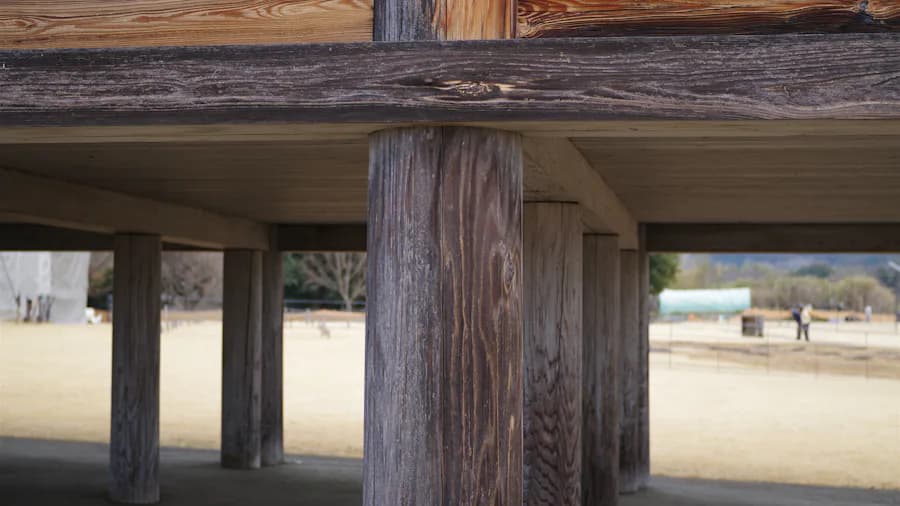
Footings are the part of the deck no one sees and the part most likely to cause inspection failure. IRC 2021 has three sections you need: R507.3 (footing diameter sized to soil + load), R403.1.4 (footing depth must reach frost line + bearing layer), and R507.5 (post-to-footing connections). Get these three right and the rest of the deck is straightforward. This guide walks through each section, the frost-depth lookup for all 50 states, and the post-base hardware required to mechanically tie posts to footings.
IRC R507.3 — Footing diameter sizing
Footing diameter is sized by tributary load (deck area each footing supports) and soil bearing capacity. R507.3 Table 1 gives you the sizes:
| Tributary area / footing | 1,500 psf clay | 2,000 psf sandy | 3,000 psf gravel |
|---|---|---|---|
| 20 sqft | 10″ dia | 8″ dia | 8″ dia |
| 40 sqft | 14″ dia | 12″ dia | 10″ dia |
| 60 sqft | 18″ dia | 14″ dia | 12″ dia |
| 80 sqft | 20″ dia | 16″ dia | 14″ dia |
| 100 sqft | 22″ dia | 18″ dia | 14″ dia |
| 120 sqft | 24″ dia | 20″ dia | 16″ dia |
Tributary area = (post spacing along beam) × (joist span ÷ 2 + cantilever). For a typical 16×20 deck with 8 ft post spacing along the beam and 12 ft joists, tributary per footing = 8 × 6 = 48 sqft. On 2,000 psf sandy soil, that's a 12-14″ diameter footing.
Soil bearing capacity
If you're not sure about your soil, IRC R401.4.1 lets you assume 1,500 psf as the default — the most conservative, lowest bearing capacity. Most US residential soils are 2,000-3,000 psf (USDA NRCS presumptive soil-bearing values), but verify with your AHJ; some require a soil test.
- Clay (organic / silty): 1,500 psf — most conservative, larger footings
- Sandy clay loam: 2,000 psf — typical Midwest farmland
- Sandy gravel / well-compacted fill: 3,000 psf — common urban backfill
- Sand or sand-gravel: 4,000 psf — coastal deltas, glacial outwash
- Sedimentary rock / partially weathered: 6,000+ psf — bedrock zones
IRC R403.1.4 — Frost depth
Footings must extend BELOW the local frost depth + at least 6 inches of bearing soil, per IRC 2021 R403.1.4 (ICC). Frost heave (water in the soil freezing and expanding) lifts shallow footings every winter; footings that reach below the frost line don't move.
State-by-state frost depths (median; cross-check your local number against NOAA / National Weather Service climate data and verify with your AHJ):
| Frost depth zone | States | Footing depth |
|---|---|---|
| 0-6" (frost-free) | FL, GA south of Atlanta, MS coastal, AL coastal, TX south of San Antonio, southern CA, southern AZ, HI | 12-24" minimum (bearing layer) |
| 6-18" | GA north of Atlanta, AL inland, MS inland, southern TN, NC piedmont, northern AZ, central CA | 24-30" |
| 18-30" | Mid-Atlantic (VA, MD, DE), TN, KY, southern OH, southern IL, MO, central CO | 36-42" |
| 30-42" | PA, NJ, southern NY, northern OH, IN, IL, MO, KS, NE, mountain WV | 48-54" |
| 42-60" | MA, CT, RI, NH, VT, ME, NY, MI, WI, IA, MN, ND, SD, MT, ID, WY, UT (Wasatch), CO (front range above 6,000 ft) | 60-66" (deepest US bracket) |
Footing depth math
Total footing depth = frost depth + 6" minimum bearing. Examples:
- Houston TX (frost 6"): 6 + 6 = 12" minimum, but most build 24-36" for hurricane uplift safety
- Atlanta GA (frost 6"): 12-24" depending on soil
- Indianapolis IN (frost 36"): 36 + 6 = 42" minimum
- Boston MA (frost 48"): 48 + 6 = 54" minimum
- Minneapolis MN (frost 60"): 60 + 6 = 66" minimum
Sonotube cardboard form lengths: 4 ft, 6 ft, 8 ft, 10 ft, 12 ft. For shallow frost zones, use 4-6 ft tubes. For deep frost (60"+), use 8-10 ft tubes. Cut to grade once concrete is poured.
Concrete spec
IRC R402.2 specifies minimum concrete strength: 2,500 psi for residential footings. Common ready-mix specs:
- 60-lb pre-mix bags (Quikrete Mix or generic 5,000 psi): typical residential, just add water and pour
- 80-lb pre-mix bags: cheaper per cubic foot, heavier to lift
- 3,000 psi ready-mix delivered (truck): for large projects with 20+ footings
Bag count math: 1 cubic foot of footing = 1.0-1.1 60-lb bags or 0.7-0.8 80-lb bags. Round up generously — leftover concrete is cheaper than running short. DeckMath's deck-footing-calculator computes exact bag counts for your dimensions.
Post-to-footing connections
IRC R507.5 requires a mechanical connection between post and footing — direct contact with concrete is not enough. Two accepted hardware:
Simpson ABU post bases (most common)
Set into wet concrete, holds the post 1" off the concrete to prevent moisture wicking into the post. Sized to the post:
- ABU44Z for 4×4 posts — $18 each
- ABU66Z for 6×6 posts — $26 each
Simpson PB post brackets (retrofit)
Bolts to top of cured concrete. Cheaper but slightly less robust. Used when concrete is already poured.
Common footing mistakes
- Footing too shallow — frost heaves the deck, joints crack. Verify your frost depth + 6" bearing.
- Footing diameter too small — soil compresses, deck settles. Use the R507.3 table with conservative bearing capacity.
- Skipping rebar in deep / large footings — typically required at 8"+ diameter for tension reinforcement. Verify with AHJ.
- Concrete not below frost line in cantilever zone — sometimes contractors set the cantilever-side footing higher to grade. The footing depth still applies regardless of where on the deck.
- Drilling post anchor bolts AFTER concrete cures — anchor pull-out strength is much weaker than wet-set. Always set anchors in wet concrete.
- Pouring concrete in subfreezing weather — concrete won't cure properly below 40°F. Use insulated blankets or wait for warmer weather.
Frequently asked questions
How deep do deck footings need to be?
Below the local frost line, plus at least 6 inches of bearing soil beneath that — IRC 2021 R403.1.4. The frost line is a local number, and the spread across the country is enormous: 0 to 6 inches in Florida, coastal Alabama and southern Texas; 18 to 30 inches through the mid-Atlantic and Tennessee; 30 to 42 inches across Pennsylvania, Ohio and Illinois; and 42 to 60 inches through New England, the upper Midwest and the northern Rockies. Add the 6 inches of bearing and the total depth follows: Indianapolis at a 36-inch frost line needs 42 inches, Boston at 48 needs 54, Minneapolis at 60 needs 66. Some jurisdictions go deeper still — Anchorage, parts of Minnesota and North Dakota, and mountain Colorado can require 60 to 72 inches or more. Look up your own jurisdiction's published figure rather than a state median before ordering forms.
What diameter footing does my deck need?
It is set by two things: how much deck each footing carries, and what the soil beneath it can bear. IRC R507.3 tabulates the combination. Work out the tributary area first — post spacing along the beam multiplied by half the joist span plus any cantilever. A 16x20 deck with posts every 8 feet and 12-foot joists gives 8 x 6 = 48 square feet per footing. Read that against the soil: at 1,500 psf clay a 40-square-foot tributary wants 14 inches diameter, at 2,000 psf sandy 12 inches, at 3,000 psf gravel 10 inches. So the 48-square-foot example lands around 12 to 14 inches on typical sandy soil. Sizing up is cheap insurance — the difference between a 12 and a 16-inch tube is a couple of bags of concrete, while an undersized footing settles and takes the deck with it.
What soil bearing capacity should I assume?
If you do not know, assume 1,500 psf. IRC R401.4.1 permits that as the default and it is the most conservative value in the table, which means it produces the largest footing for a given load — the safe direction to be wrong in. For reference, organic and silty clay is the 1,500 psf case, sandy clay loam of the kind common across Midwest farmland is about 2,000, well-compacted sandy gravel and urban backfill about 3,000, sand and sand-gravel around 4,000, and weathered sedimentary rock 6,000 or more. Some jurisdictions require an actual soil test before they will accept a higher value, and it is worth asking, because moving from 1,500 to 3,000 psf can drop a 60-square-foot tributary footing from 18 inches diameter to 12 — a real saving in concrete and digging across eight footings.
How much concrete does a deck footing take?
Volume is pi times the radius squared times the depth, in feet. A 12-inch diameter footing 48 inches deep is pi x 0.5² x 4, about 3.1 cubic feet. Convert to bags at roughly one 60-pound bag per cubic foot, or about 0.75 of an 80-pound bag, so that footing is about 4 sixty-pound bags or 3 eighty-pound bags. Add 10% for spillage and the inevitable partial bag. Two practical notes. Sonotube forms come in 4, 6, 8, 10 and 12-foot lengths, so shallow frost zones use 4 to 6-foot tubes and deep frost zones 8 to 10-foot, cut to grade after the pour. And bagged mix stops making sense somewhere around eight footings — past that, ready-mix delivered by truck is cheaper per cubic foot, provided the whole pour is scheduled for one day, since delivered concrete has to be placed within about 90 minutes.
Do deck footings need rebar?
The IRC does not require reinforcement in residential deck footings under 8 inches in diameter, and plenty of small decks are poured without any. From about 10 inches upward it becomes common practice to tie a single vertical #3 or #4 bar, and some inspectors ask for a bar in every footing regardless of size as a matter of local policy. Since this is one of the areas where jurisdictions differ most, ask before the dig rather than after the pour — adding a bar costs a couple of dollars, and re-pouring a footing costs a day. The related mistake to avoid is more expensive than the rebar question: pouring concrete below about 40°F, where it will not cure properly. If the forecast is marginal, use insulated blankets or wait for the weather.
Can I build a deck on an existing patio or slab?
Occasionally, but usually not, and the reason matters. A deck footing has to reach below the frost line and bear on soil that can carry the load, and a typical residential patio is 4 inches of unreinforced concrete sitting on grade — it satisfies neither test. Using it as a footing means the deck rides on a slab that itself heaves with frost. Where the existing concrete is genuinely reinforced and deep enough, verified by a core sample rather than by looking at it, it can sometimes be accepted. The normal solution is to break through the slab at each post location and pour proper footings underneath, which is more work than an open yard but entirely routine. Ask the building department before designing around the slab; this is a question inspectors answer readily.
What is frost heave and why does it wreck decks?
Water in soil expands as it freezes, and if that happens under a footing it lifts the footing with it. The thaw lets it settle again, but rarely back to exactly where it started, so each winter racks the structure a little further: joints open, posts go out of plumb, and the deck twists relative to the house it is attached to. Footings that reach below the frost line avoid it entirely, because the ground below that depth stays near a constant 50°F year-round and never freezes. This is why the depth requirement is not negotiable and why a shallow footing is the single most expensive shortcut on a deck — the damage shows up two or three winters later, by which time it means lifting the deck to fix.
How do I attach the post to the footing?
With a mechanical stand-off anchor, not by standing the post on the concrete. IRC R507.5 requires a mechanical connection, and the reason is rot rather than uplift: concrete holds moisture, and a post in direct contact wicks it up the end grain and fails from the bottom in three to five years. The standard hardware is a Simpson ABU post base set into wet concrete, which holds the post an inch clear — about $18 for an ABU44Z on a 4x4 and $26 for an ABU66Z on a 6x6. Where the concrete is already cured there is a retrofit alternative, the Simpson PB bracket bolted to the top, which is cheaper but not as strong. Wet-set whenever you can: anchor bolts drilled into cured concrete have markedly lower pull-out strength than the same anchor set in the pour.
How long before I can build on new footings?
24 to 48 hours before the concrete will carry post loads, and 28 days to full design strength — but the second number rarely gates the build. Most crews set the post bases into the wet pour, come back after 48 hours and start framing, which works because the loads a deck frame puts on a green footing are a fraction of what it will carry finished. What does matter in that window is protecting the pour: keep it damp in hot weather so it does not cure too fast, and keep it above 40°F in cold weather, using insulated blankets if needed, because concrete that freezes before it sets never reaches its rated strength. The IRC minimum for residential footings is 2,500 psi, and typical bagged mixes exceed it comfortably.
Are helical piers a good alternative to concrete footings?
They can be, and they are dramatically faster: a steel helical pier screws into the ground in around 30 minutes against roughly 4 hours to dig, form, pour and cure a concrete footing, with no spoil to remove and no cure time before framing. Cost per footing is broadly comparable once labour is counted. The catch is acceptance — some jurisdictions do not permit helicals for residential decks at all, and others require an engineer's specification for the pier and its capacity in your soil. Concrete in a sonotube remains the residential standard for that reason. If the site is difficult, wet, or has no access for a digger, it is worth a call to the building department before dismissing piers, because on those sites they can be the difference between a straightforward build and a very hard one.
Related calculators
Related guides
Get matched
Want 2–3 free quotes for this exact deck?
We'll send your plan to vetted local builders. Free, no obligation.