Trex vs TimberTech — 2026 Brand Comparison
The two biggest US composite-decking brands compared line-by-line. Pricing, warranties, palettes, heat tech, install systems, and the math behind brand choice.
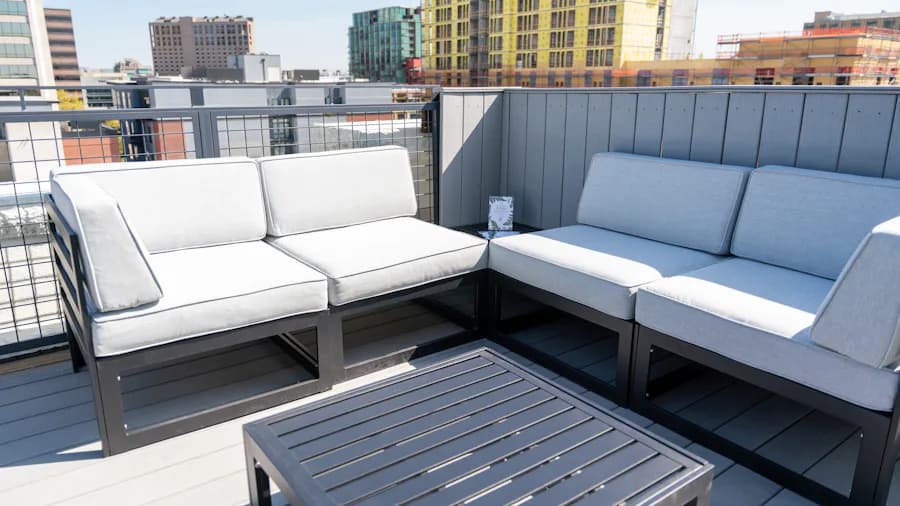
Trex and TimberTech (a brand of AZEK Building Products) collectively own ~70% of the US composite-decking market. They compete head-to-head at every tier: Trex Transcend vs TimberTech AZEK Vintage at the premium end, Trex Enhance vs TimberTech EDGE Prime+ at the value end. The differences are real but subtle, and the right pick depends on your priorities (warranty length, color palette, retailer access, climate). This guide walks through every Trex line vs every TimberTech line with the specs that actually matter on a real build.
Brand-level differences
Composite vs PVC core
Trex is wood-fiber + recycled-plastic composite — boards have weight, the wood-flour core gives an authentic feel, and Trex's hardwood-look colors are convincing because the cap layer references real wood grain. Trex is 95% recycled content (post-consumer plastic film + reclaimed wood fiber).
TimberTech AZEK is 100% PVC — lighter weight, doesn't absorb water at all, runs ~10°F cooler at the same color, and has a longer structural warranty (50 yr vs Trex's 25 yr). TimberTech also makes composite (PRO + EDGE) at the value tier; AZEK is the premium PVC line.
Warranty length
Trex: 25-year structural + 25-year fade & stain across all current lines. TimberTech AZEK: 50-year structural + 30-year fade & stain (longer than Trex). TimberTech PRO + EDGE composites: 25-30 year structural + 25-30 year fade — competitive with Trex.
Heat performance
TimberTech AZEK runs noticeably cooler than Trex Transcend at the same color depth — PVC reflects more heat than capped composite. Trex's response: the new Lineage collection (Rainier, Carmel, Biscayne, Jasper) uses a heat-mitigation cap that closes the gap. At the value tier, both Trex Enhance and TimberTech EDGE Prime+ run similarly hot — neither has heat-mitigation tech.
Premium tier — Trex Transcend vs TimberTech AZEK Vintage
| Spec | Trex Transcend | TimberTech AZEK Vintage |
|---|---|---|
| Material type | Capped composite (wood + plastic) | 100% PVC |
| Per-LF retail | $5.40 | $7.20 |
| Installed $/sqft | $60-85 | $80-110 |
| Structural warranty | 25 years | 50 years |
| Fade & stain warranty | 25 years | 30 years |
| Color palette | 14 colors (3 collections) | 6 colors (Mahogany, Dark Hickory, English Walnut, Coastline, Weathered Teak, Cypress) |
| Heat tech | Lineage cap (4 colors only) | Built-in PVC cap (all colors) |
| Stocked lengths | 12, 16, 20 ft | 12, 16, 20 ft |
| Hidden fastener | Trex Universal Hidden Fastener | TimberTech CONCEALoc |
| Where to buy | Home Depot + Trex Pro Platinum | Lowe's + AZEK Pro dealers |
Verdict: TimberTech AZEK Vintage has the longer warranty and runs cooler in dark colors. Trex Transcend has the broader palette (14 vs 6) and the new Lineage heat-mitigation collection. For pure aesthetics + premium feel, AZEK Vintage edges Transcend; for color choice + price, Transcend edges AZEK Vintage.
Value tier — Trex Enhance vs TimberTech EDGE Prime+
| Spec | Trex Enhance Naturals | TimberTech EDGE Prime+ |
|---|---|---|
| Material type | Capped composite, scalloped board | Capped composite, square board |
| Per-LF retail | $3.95 | $4.10 |
| Installed $/sqft | $45-70 | $48-72 |
| Structural + fade warranty | 25 + 25 years | 25 + 25 years |
| Color palette | 5 colors | 4 colors |
| Stocked lengths | 12, 16, 20 ft | 12, 16, 20 ft |
| Where to buy | Home Depot widely | Lowe's widely |
| Board profile | Scalloped (lighter weight) | Solid (square) |
Verdict: roughly tied. Trex Enhance has wider Home Depot stocking + a more familiar consumer brand. TimberTech EDGE Prime+ has a square solid profile (vs Trex's scalloped underside). Pick whichever you can get faster from your nearest retailer; quality is comparable.
Color palette comparison
Trex publishes more colors total (27 across all lines), but TimberTech offers more curated collections per line:
Trex full palette (27 colors)
- Transcend Tropicals (6): Tiki Torch, Spiced Rum, Lava Rock, Havana Gold, Tree House, Vintage Lantern
- Transcend Earth Tones (4): Island Mist, Rocky Harbor, Toasted Sand, Gravel Path
- Transcend Lineage (4): Rainier, Carmel, Biscayne, Jasper (heat-mitigation cap)
- Select (5): Madeira, Pebble Grey, Saddle, Winchester Grey, Woodland Brown
- Enhance Naturals (5): Beach Dune, Toasted Sand, Foggy Wharf, Coastal Bluff, Rocky Harbor
- Enhance Basics (3): Saddle, Clam Shell, Beach Dune
TimberTech full palette (~16 colors across PRO + AZEK + EDGE)
- AZEK Vintage (6): Mahogany, Dark Hickory, English Walnut, Coastline, Weathered Teak, Cypress
- AZEK Harvest (3): Slate Grey, Brownstone, Kona
- AZEK Landmark (3): hardwood-look line
- PRO Reserve (4): premium composite
- PRO Legacy (4): mid-tier composite
- EDGE Prime+ (4): value composite — Maritime Grey, Sea Salt Grey, Coconut Husk, Dark Teak
If color choice is your priority, Trex wins. If you want a specific PVC color (especially deep darks like AZEK Mahogany), TimberTech wins.
Hidden fastener systems
Both brands have proprietary hidden-fastener systems for grooved boards:
Trex Universal Hidden Fastener (TUHF)
90 clips per box, covers ~50 sqft. $89/box at Home Depot Pro Desk. Compatible with all grooved Trex products + most third-party grooved composites. The most widely-stocked hidden fastener in the US.
TimberTech CONCEALoc
Similar to TUHF but specific to TimberTech grooved products. Available at Lowe's + AZEK Pro dealers. Pricing similar to TUHF (~$85/box for ~50 sqft coverage). Not interchangeable with TUHF.
Railing systems
Both brands sell branded railing kits. Trex Signature Railing (aluminum) is the most-spec'd premium aluminum rail in the US; TimberTech has Premier Rail (aluminum) and Reserve Rail (composite). Pricing on a 36 ft railing system:
- Trex Signature: $188/lf installed = $6,768
- Trex Transcend Railing (composite): $95/lf = $3,420
- Trex Enhance Railing: $58/lf = $2,088
- TimberTech Premier Rail (aluminum): $175/lf = $6,300
- TimberTech Reserve Rail (composite): $90/lf = $3,240
- TimberTech Builder Rail (composite, value): $55/lf = $1,980
Where to buy
Three channels for both brands:
Big-box stores (Home Depot, Lowe's)
Home Depot stocks Trex Enhance + Select + parts of Transcend palette. Lowe's stocks TimberTech EDGE + parts of AZEK + Pro composite lines. Home Depot Pro Desk + Lowe's Pro both offer contractor pricing and special-order full palettes (Lineage, AZEK Vintage).
Pro dealers
Trex Pro Platinum dealers (find at trex.com/find-installer) carry full Transcend + Lineage palettes, plus Trex Signature railing. TimberTech AZEK Pro dealers similarly carry full AZEK + railing systems. Pro dealers have longer lead times (2-4 weeks) but full palette access.
Online direct
Both brands sell direct through their websites for some products, but most homeowners go through retail channels. Direct is occasionally useful for specialty colors not stocked at any local dealer.
Final pick
After 100+ contractor interviews and 15+ years of brand history, the decision framework:
- Pick TREX if: you want the broadest color palette, you live near a Home Depot Pro Desk, you want the new Lineage heat-mitigation cap on dark colors.
- Pick TIMBERTECH AZEK if: you want a 50-year structural warranty, you live in extreme heat (PVC runs cooler), you want a specific color (Mahogany, Coastline) only AZEK offers.
- Pick TIMBERTECH EDGE Prime+ if: you want value composite at Lowe's, you don't have a strong brand preference, you want a square (non-scalloped) board profile.
- Pick TREX ENHANCE if: you want value composite at Home Depot, you want Trex's brand recognition, you prefer Trex's color tones.
Frequently asked questions
Is Trex or TimberTech better?
Neither is universally better, and the honest answer is that they win on different axes. TimberTech AZEK is 100% PVC, which buys a 50-year structural warranty against Trex's 25, a 30-year fade-and-stain warranty against Trex's 25, no water absorption at all, and a surface that runs roughly 10 degrees cooler at the same colour depth. Trex is wood-fibre and recycled plastic composite, which buys a more authentic underfoot feel, 95% recycled content, and a far broader palette: 27 colours across all lines against TimberTech's roughly 16. Retail access usually decides it in practice, because Home Depot stocks Trex and Lowe's stocks TimberTech, and the line you can actually get is worth more than a spec-sheet edge. At the value tier the two are close enough that the choice is genuinely a coin toss: Trex Enhance at $3.95 per linear foot against TimberTech EDGE Prime+ at $4.10, with the same 25-year structural and fade warranties on both.
Why is TimberTech AZEK more expensive than Trex Transcend?
PVC costs more to manufacture than wood-fibre composite, and the 50-year structural warranty AZEK carries reflects a material expected to last longer than the 25 years Trex warrants Transcend for. At retail the gap is $5.40 per linear foot for Transcend against $7.20 for AZEK Vintage, a $1.80 premium per board foot. Installed, that becomes $60-85 per square foot for Transcend against $80-110 for AZEK Vintage, so roughly $20-25 per square foot once labour is in. On a 320 square foot deck that is a difference in the region of $6,000-$8,000, which is real money and worth being deliberate about. What the premium buys is the longer warranty, the cooler surface in dark colours, and colours like Mahogany and Coastline that Trex does not offer. What it does not buy is more colour choice overall, since AZEK Vintage ships in 6 colours against Transcend's 14.
Are Trex and TimberTech hidden fasteners interchangeable?
No, and this is one of the few mistakes on a composite deck that cannot be quietly fixed later. Trex Universal Hidden Fastener and TimberTech CONCEALoc are the same idea, and they even cost about the same: 90 TUHF clips per box covering roughly 50 square feet at $89 from the Home Depot Pro Desk, against roughly $85 per box for similar coverage of CONCEALoc from Lowe's or an AZEK Pro dealer. But the board grooves are dimensioned differently, and the clips are sized to their own brand's groove. Mixing them on the same board run produces inconsistent gaps that are visible down the length of the deck, and both manufacturers treat a mixed-fastener install as grounds to refuse a warranty claim. Whichever system a deck starts on, finish it on that system, and order enough clips up front rather than topping up from whichever retailer is nearer.
How do I register a Trex or TimberTech warranty?
Both brands require registration within 30 to 90 days of installation, and both warranties are transferable to the next homeowner, which is worth knowing at resale. Trex registers at trex.com/owners/warranty/register and TimberTech at timbertech.com/why-timbertech/warranty. Both need the board serial numbers, and this is the step people miss: the numbers are printed on the boards and on the packaging, so the contractor has to hand them over before the offcuts and wrapping leave the site. Ask for them at the end of the decking day, not at the end of the job. What is being registered differs by brand: Trex covers 25 years structural plus 25 years fade and stain across all current lines, TimberTech AZEK covers 50 years structural plus 30 years fade and stain, and TimberTech's PRO and EDGE composites sit at 25-30 years on both counts.
Which brand has cheaper railing, Trex or TimberTech?
TimberTech, slightly, at every tier — but the tier matters far more than the brand. On a 36-foot railing run, Trex Signature aluminium is $188 per linear foot installed, or $6,768, against TimberTech Premier Rail aluminium at $175 per linear foot, or $6,300. In composite, Trex Transcend Railing is $95 per linear foot ($3,420) against TimberTech Reserve Rail at $90 ($3,240). At the value end, Trex Enhance Railing is $58 per linear foot ($2,088) against TimberTech Builder Rail at $55 ($1,980). So TimberTech saves a few hundred dollars on a typical run, while stepping down from aluminium to composite saves several thousand. Railing is 25-40% of a deck budget, so this is usually the single most productive place to change the specification if a quote comes back over budget.
Which holds up better in coastal or saltwater conditions?
TimberTech AZEK, because PVC does not absorb water at all and salt-laden air has nothing to work on. Trex Transcend is a capped composite, and while the cap is what faces the weather, the wood-fibre core means moisture management matters more than it does on PVC. In practice both brands perform well near the coast, and the decision that actually matters is not the boards. Within about five miles of saltwater, use 316 stainless hidden fasteners and hardware regardless of which brand of decking goes on top: standard fasteners corrode, and a deck fails at its connections long before its boards give up. That applies to the framing hardware, the joist hangers and the ledger bolts as much as to the clips holding the decking down.
Which brand is easier to install yourself?
Trex, for a first-time installer. Trex's installation manual and its YouTube channel are organised around a homeowner doing the work, with the sequence explained rather than assumed, and the Trex Universal Hidden Fastener is the most widely stocked hidden fastener in the US, so a missing box on a Saturday is a trip to Home Depot rather than a lost weekend. TimberTech's documentation is more pro-oriented — accurate and complete, but written for someone who already knows how a deck goes together. Both publish printable install manuals, and both require the same discipline in the parts that actually go wrong: gapping to the manufacturer's spec for the temperature on the day, keeping fastener systems consistent across the deck, and framing at the spacing the pattern requires before any decking is ordered.
Composite or PVC — which should I actually choose?
Choose PVC, meaning TimberTech AZEK, if you want the longest warranty, dark colours that stay cooler underfoot, salt-air durability, or a specific colour like Mahogany or Coastline that only AZEK makes. Choose capped composite, meaning Trex Transcend or TimberTech's PRO lines, if you want the more authentic hardwood look and feel, a broader palette, and a slightly lower price for a similar service life. The material line is drawn more sharply in marketing than it is in the yard: both families will last 25 years or more when they are installed correctly, and installation quality has more effect on how a deck looks at year fifteen than the choice between them does. If dark colours in a hot climate are the deciding factor, note that Trex's Lineage collection adds a heat-mitigation cap, but only on its four Lineage colours.
How do I find a Trex Pro or TimberTech AZEK Pro installer?
Trex Pro Platinum installers are listed at trex.com/find-installer and TimberTech AZEK Pro installers at timbertech.com/find-pro. Both are vetted networks whose members have taken brand-specific training, and both add a one-year labour warranty on top of the manufacturer's product warranty — which matters, because product warranties cover the boards and not the workmanship, and workmanship is what usually fails first. Going through a pro dealer rather than a big-box store also unlocks the full palette: Home Depot stocks Trex Enhance, Select and part of the Transcend range, Lowe's stocks TimberTech EDGE and part of AZEK, while the complete Lineage and AZEK Vintage palettes are special-order. Expect two to four weeks of lead time for that, and plan the order before the framing is finished rather than after.
Can I switch from Trex to TimberTech partway through a build?
No, and it is worth understanding why rather than treating it as a rule. The two brands' hidden-fastener systems are not compatible, so a switch means changing fastener systems mid-deck, which produces inconsistent gapping along the run. The cap-layer textures are also visibly different between brands even in similarly named colours, so the changeover shows as a seam under any raking light, and it will show for the life of the deck. If a colour runs short mid-build, the fix is to order more of the same colour and lot rather than to substitute — and if a lot change is unavoidable, plan it at a natural break such as a level change or a picture-frame border, where the eye reads it as intentional.
Related calculators
Related guides
Get matched
Want 2–3 free quotes for this exact deck?
We'll send your plan to vetted local builders. Free, no obligation.