Composite vs Wood Decking — 25-Year Comparison
The complete cost-of-ownership comparison: pressure-treated wood vs composite vs PVC over a 25-year horizon, including the break-even year math for every common product line.
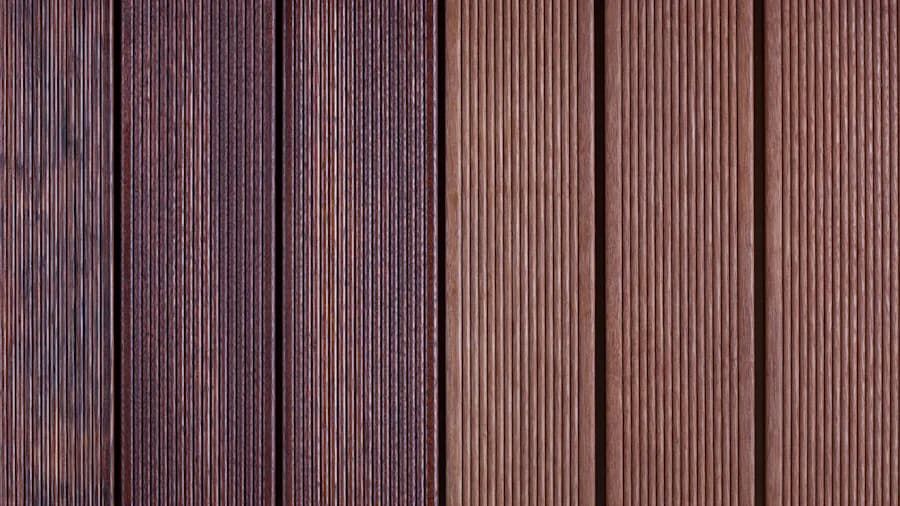
The biggest decision in any deck build is also the most argued about: should you go composite or stick with pressure-treated wood? Composite costs 2-3× more upfront, but it eliminates ~$0.55/sqft/year in stain and seal cost — and PT decks typically need surface-board replacement at year 15-18. Run the math over 25 years and the answer flips: mid-tier composite usually wins by year 10-14, and premium composite stays even further ahead. This guide walks through the math with real product prices, real maintenance schedules, and the brand-by-brand break-even years for the 10 most-popular composite lines.
Year-zero pricing — the upfront gap
On a 16×20 deck (320 sqft), national-average installed pricing in 2026:
| Material | $/sqft installed | 320 sqft total | Premium vs PT |
|---|---|---|---|
| PT pine 5/4×6 | $25-40 | $8,000-12,800 | — |
| Cedar 5/4×6 | $35-55 | $11,200-17,600 | +40% |
| Trex Enhance Basics | $45-65 | $14,400-20,800 | +80% |
| Trex Transcend | $60-85 | $19,200-27,200 | +140% |
| TimberTech AZEK Vintage | $80-110 | $25,600-35,200 | +220% |
| Ipe (tropical hardwood) | $90-140 | $28,800-44,800 | +260% |
The upfront premium for composite is real — anywhere from 80% to 220% over PT. The case for composite has to be made over the long term, not at the contractor signing.
Annual maintenance — where PT lumber bleeds
PT pine needs to be cleaned + brightened + stained or sealed every 2-3 years. Costs per year on a 320 sqft deck:
- Wood cleaner / brightener: $24-36 (1 gal kit)
- Stain (semi-transparent, mid-quality): 3 gallons × $45 = $135 every 3 years = $45/yr amortized
- Brushes / pads / drop cloths: $25 every cycle = $8/yr amortized
- Labor (DIY, 8 hours per cycle every 3 years): your weekend
- Total materials: ~$0.55/sqft/yr · $176/yr on a 320 sqft deck
Composite needs annual cleaning only — soft brush + mild detergent + garden hose. ~$15/yr in cleaner. That's $0.05/sqft/yr or $16/yr on the same deck. Composite's maintenance is 10× cheaper than PT's.
Lifespan — when do you replace?
Manufacturer warranties tell you what THEY warrant; real-world lifespan is usually a few years longer if maintained, shorter if neglected. Realistic 25-year horizons:
| Material | Manufacturer warranty | Real-world lifespan (well-maintained) | Surface replacement at |
|---|---|---|---|
| PT pine 5/4×6 | 1-yr lumber, 30-yr treatment | 15-25 years (boards) | Year 15-18 typical |
| Cedar 5/4×6 | Limited 5-yr | 20-30 years | Year 20-25 |
| Trex Transcend | 25-yr structural + fade | 25-35 years | Rarely; cap may need re-staining |
| TimberTech AZEK Vintage | 50-yr structural, 30-yr fade | 30-50 years | Almost never (PVC) |
| Ipe | — | 40-75 years | Almost never (dense) |
25-year total cost of ownership
On a 320 sqft deck, summing year-zero install + 25 years of maintenance + a typical PT board replacement at year 18 (surface only, $20/sqft = $6,400):
| Material | Year-0 install | 25-yr maintenance | Replacement | 25-yr TCO |
|---|---|---|---|---|
| PT pine | $10,400 | $4,400 | $6,400 | $21,200 |
| Cedar | $14,400 | $4,400 | $0 (long-life) | $18,800 |
| Trex Enhance | $17,600 | $400 | $0 | $18,000 |
| Trex Transcend | $23,200 | $400 | $0 | $23,600 |
| TimberTech AZEK Vintage | $30,400 | $320 | $0 | $30,720 |
| Ipe | $36,800 | $2,800 (oil) | $0 | $39,600 |
Mid-tier composite (Trex Enhance) basically ties cedar at year 25, and BOTH come in cheaper than PT despite the higher upfront cost — because PT's stain budget + replacement at year 18 stack up. Premium composite (Transcend, AZEK Vintage) is more expensive 25-year TCO than PT, but you also get the no-maintenance lifestyle and the look of hardwood.
Break-even year by product
The 'break-even year' is when cumulative composite cost first crosses below cumulative PT cost. For a 320 sqft deck in the South region (0.92× labor), assuming PT replacement at year 18:
| Composite line | Break-even year | TCO advantage at year 25 |
|---|---|---|
| Veranda Armorguard (cheapest) | Year 8 | +$4,800 |
| Trex Enhance Basics | Year 9 | +$3,600 |
| Fiberon Good Life | Year 10 | +$2,800 |
| Trex Enhance Naturals | Year 11 | +$1,900 |
| TimberTech EDGE Prime+ | Year 12 | +$1,200 |
| Trex Select | Year 13 | +$600 |
| Trex Transcend | Year 17 | Even |
| TimberTech AZEK Vintage | Year 22 | −$2,400 (premium pays for aesthetics) |
| Deckorators Voyage | Year 18 | Even |
| Ipe | Never | Premium for the look + 50-yr life |
Value-tier composites (Veranda, Trex Enhance Basics, Fiberon Good Life) break even by year 10 — the math works for almost any homeowner. Premium tiers don't break even on dollars-only TCO; you're paying for aesthetics and zero-maintenance lifestyle, not for cost savings.
Heat performance — the hidden composite trade-off
Composite gets HOT in direct sun. Surface temps on a 90°F day, dark colors:
- PT pine (any color): 120-140°F (wood radiates absorbed heat)
- Light-color composite (Trex Toasted Sand, Foggy Wharf): 130-145°F
- Dark composite (Trex Lava Rock, AZEK Dark Hickory): 160-175°F
- Trex Lineage heat-mitigation cap (same dark color): 130-150°F (20-30°F cooler)
- Mineral-core composite (Deckorators): runs ~10°F cooler than wood-flour composite at same color
- PVC (TimberTech AZEK, Wolf Serenity): runs ~10°F cooler at same color
Environmental impact
PT lumber: harvested from sustainably-managed pine plantations (Sustainable Forestry Initiative certified for most US-grown PT). Treatment uses ACQ or copper azole — toxic to fish/aquatic life if leached, though modern PT lumber leaches minimally compared to pre-2003 CCA-treated lumber (the EPA phased CCA out of residential use).
Composite: 95% recycled content for Trex (reclaimed wood fiber + post-consumer plastic film). TimberTech / Fiberon similar. PVC composites use virgin polymer with low recycled content. End-of-life: composite isn't recyclable in most municipal streams; goes to landfill. PVC similarly.
Tropical hardwoods (Ipe, Cumaru): often FSC-certified now but historically associated with rainforest deforestation. Verify chain-of-custody before buying.
Decision framework
Pick PT if: you have time to maintain (annual stain), you're staying ≤10 years (don't need 25-yr TCO), you have a tight budget, or you want a traditional wood look.
Pick mid composite (Trex Enhance, Fiberon Good Life): you want 25-yr life with low maintenance, you're staying long-term (10+ years), and you can afford 80% premium upfront.
Pick premium composite or PVC (Trex Transcend, AZEK Vintage): you want hardwood look without hardwood maintenance, premium aesthetic is non-negotiable, and you live in extreme climate (Phoenix sun, Maine snow).
Pick tropical hardwood (Ipe): you want 50-yr life, premium aesthetic, and you can budget for annual oil maintenance + the hardest-on-tools install in residential construction.
Frequently asked questions
Is composite decking worth the extra cost?
For a homeowner staying put, usually yes, and the reason is maintenance rather than the boards. Pressure-treated decking needs cleaning, brightening and a fresh stain every two to three years, which works out near $0.55 per square foot a year, about $176 annually on a 320 square foot deck, plus a weekend each cycle. Composite asks for washing at roughly $0.05 per square foot a year. Add the surface-board replacement a pressure-treated deck typically needs around year 15 to 18, about $6,400 on that deck, and the 25-year totals converge: $21,200 for pressure-treated against $18,000 for mid-tier composite. Value-tier composite breaks even around year 8 to 10, which covers most owners. Premium lines are a different decision: Transcend breaks even near year 17 and AZEK Vintage not at all on dollars, so you are buying appearance and freedom from upkeep, not savings.
How long does composite decking actually last?
Warranties run 25 to 50 years depending on the line, and real-world service is close: about 25 to 35 years for capped composite and 30 to 50 for capped PVC, assuming correct installation. What actually ages is the cap, the textured polymer shell bonded over the core. While the cap is intact the board is effectively sealed, which is why the material does not rot, does not need sealing and does not host insects. Damage that breaches the cap, from a dragged fire pit or a careless cut, exposes the wood-flour core and is the one failure mode worth avoiding. Two installation details decide whether you reach the upper end of that range: joist spacing to the manufacturer's specification, and joist tape over the framing so moisture trapped under the boards does not rot the structure beneath a surface that will outlive it.
Does composite decking get hot?
Yes, and dark composite gets hotter than wood. On a 90 degree day, measured surface temperatures run 120 to 140 degrees for pressure-treated pine of any colour, 130 to 145 for light composite such as Toasted Sand or Foggy Wharf, and 160 to 175 for dark composite such as Lava Rock or Dark Hickory, which is uncomfortable barefoot. Three engineering answers exist. Heat-mitigation caps, such as the Trex Lineage colours, run 20 to 30 degrees cooler at the same shade. PVC boards run about 10 degrees cooler than wood-flour composite at the same colour. Mineral-core boards such as Deckorators run about 10 degrees cooler as well. If you are in Phoenix, Las Vegas, Austin or anywhere with a long run of 95 degree days, choose a cool-rated colour or one of those lines, because a dark deck without heat technology is unusable from June to September.
Can I install composite over my old PT framing?
Sometimes, and it is worth checking properly because the saving is large. Three conditions have to hold. The framing must be free of rot, which means probing joists and the ledger rather than glancing at them. The joist spacing must meet the composite manufacturer's requirement, 16 inches on centre for parallel boards and 12 inches for diagonal, and older decks framed at 24 inches will need sistered or added joists. And the ledger flashing must be sound, since you are about to cover it for another 25 years. Most manufacturers also recommend joist tape over the top of every joist before the boards go down, because composite traps moisture against the framing more than wood decking does. Given that the new surface may outlast the structure under it, the framing inspection you do at this point is the whole decision.
What's the cheapest composite brand?
Veranda Armorguard at Home Depot and Trex Enhance Basics are the two cheapest brand-name capped composites, both landing around $45 to $55 per square foot installed and both carrying 25-year warranties with a workable four to six colour palette. That is roughly $8 to $15 per square foot below Trex Enhance Naturals or Fiberon Good Life, which is real money across a full deck. They are also the two lines with the fastest payback against pressure-treated, breaking even around year 8 and year 9 respectively. What you give up at this tier is colour depth and grain realism rather than durability or coverage, since the warranty is the same as the flagship. If the deck is a functional surface rather than the centrepiece of the garden, the value tier is the rational buy and the money saved is better spent on railing or lighting.
What's the best composite for hot climates?
Three lines are engineered specifically for heat, and any of them beats choosing a dark board from a standard line. Trex Transcend Lineage uses a heat-mitigation cap and runs 20 to 30 degrees cooler than the same colour without it. TimberTech AZEK is PVC rather than wood-flour composite and runs about 10 degrees cooler at matched colour, with the side benefit of not absorbing water at all. Deckorators Voyage uses a mineral core, runs cooler than wood-flour composite and is about 35 percent lighter, which also makes it easier to handle. Whichever you pick, colour still does most of the work: a light board in a standard line can be cooler than a dark board in a heat-mitigating one. In a genuinely hot market, treat colour as a functional specification rather than a decorating choice.
Can I stain composite?
No, and attempting it is one of the more expensive mistakes available. The polymer cap that makes composite low-maintenance is also non-porous, so stain cannot penetrate it. What happens instead is that the finish beads, sits on the surface, then peels in sheets within months, leaving a deck that looks worse than the faded boards you were trying to improve and is difficult to strip. If a composite deck has faded unevenly, the correct route is the manufacturer's own restoration product, since several brands sell a paint system formulated to bond to their cap, Trex's RetroFit and Renew products being the familiar example. For deeper damage such as a breached cap or a burn, replace the affected boards. This is also the practical difference between wood and composite: wood can be refinished repeatedly, composite cannot, so it is replaced rather than restored.
Is PVC the same as composite?
No. Composite is a mix of wood fibre and plastic with a polymer cap, which covers Trex, Fiberon, MoistureShield and Veranda. PVC is 100 percent polymer with no wood content at all, which covers TimberTech AZEK and Wolf Serenity. The practical differences follow from the wood content: PVC weighs less, runs about 10 degrees cooler at the same colour, does not absorb water under any circumstance, and typically carries a longer structural warranty, 50 years on AZEK Vintage against 25 on most composite. It also costs more upfront, $80 to $110 per square foot installed against $45 to $65 for value composite. For most homeowners either will last beyond the time they own the house if installed correctly, so the choice is usually about heat, weight and budget rather than about which technology is fundamentally better.
What about wood-plastic-composite vs capped composite?
Capped is what you want, and in practice it is what you will find. Every current board from Trex, TimberTech, Fiberon and Deckorators is capped composite, meaning the wood-flour and plastic core is sealed inside a polymer shell that handles fading, staining and moisture. Uncapped wood-plastic composite was the standard before about 2010 and is the reason composite decking earned an early reputation for mould, staining and colour loss, because an exposed wood-flour surface behaves much like wood without the option to sand and refinish it. It survives today only in the cheapest big-box products. If you encounter a composite board priced well below the value tier, check specifically whether it is capped, and on which faces, since some budget products cap three sides and leave the bottom open.
Is Ipe really better than composite?
Better at some things, worse at others, and the honest comparison depends on what you are optimising for. Ipe lasts 40 to 75 years against 25 to 35 for capped composite, it is genuine hardwood rather than an imitation of one, and its density gives it a surface no composite matches. It also costs $90 to $140 per square foot installed against $45 to $65 for value composite, requires pre-drilling for every fastener, dulls tools, and needs a UV oil every one to two years if you want to keep the brown rather than let it silver. So composite is easier to live with and cheaper to own, while Ipe is the choice when you want a 50-year natural wood deck and accept the upkeep that goes with it. Note that untreated Ipe does not fail when neglected; it just changes colour.
Related calculators
Related guides
Get matched
Want 2–3 free quotes for this exact deck?
We'll send your plan to vetted local builders. Free, no obligation.