Does a Deck Add Home Value? Deck ROI 2026
A deck is one of the few outdoor projects that reliably pays part of itself back. Here's what the 2026 resale data actually shows — and how to build for it.
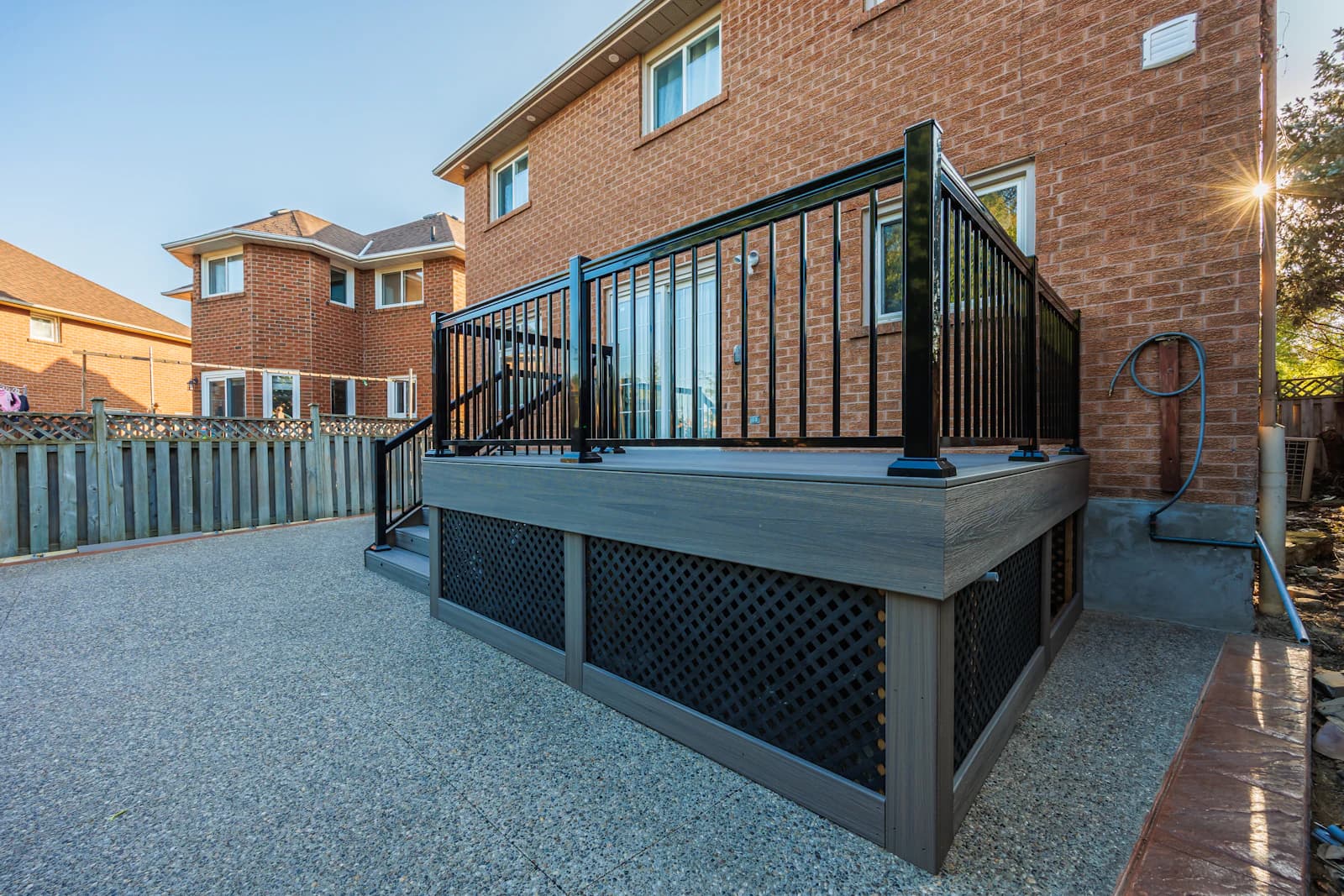
Yes — a deck adds home value, and it's one of the better-returning outdoor projects. Industry resale data has long put a new wood deck's cost recouped at roughly 50–65% at sale, with composite decks recouping a bit less on paper because they cost more to build. But ROI is only half the story: a deck also sells the lifestyle, and a well-kept one helps a home move faster. Here's the honest breakdown for 2026.
How much value does a deck add?
There's no single dollar figure — value depends on your market, the deck's size and condition, and how well it fits the house. But two things are consistent: buyers expect usable outdoor space, and a deck expands a home's *effective* living area for a fraction of what an indoor addition costs. National remodeling ROI studies (the annual Remodeling Cost vs. Value report is the standard reference) have historically shown a new wood deck recouping around 50–65% of its cost at resale.
Because recoup is a percentage of cost, the *cheaper* your build is to do well, the better the ROI looks. A tidy pressure-treated deck often shows a stronger recoup rate than an expensive composite one — even though the composite deck may attract buyers and last longer. Know your build cost first with the deck cost calculator.
Wood vs composite for resale
| Factor | Wood deck | Composite deck |
|---|---|---|
| Build cost | Lower | Higher |
| ROI % (cost recouped) | Often higher on paper | Often lower on paper |
| Buyer appeal / low upkeep | Good | Strong (no sealing) |
| Condition risk at sale | Higher (needs upkeep) | Lower (ages well) |
The paradox: wood tends to win the ROI *percentage*, but composite can win the *sale* by showing better and promising no maintenance. If you'll sell soon, a clean, well-maintained wood deck is the value play. If you'll stay years and want it effortless, composite earns its keep — the long-run numbers are in the 25-year cost-of-ownership guide. Deciding on the wood itself? Compare cedar vs pressure-treated.
What actually drives deck value
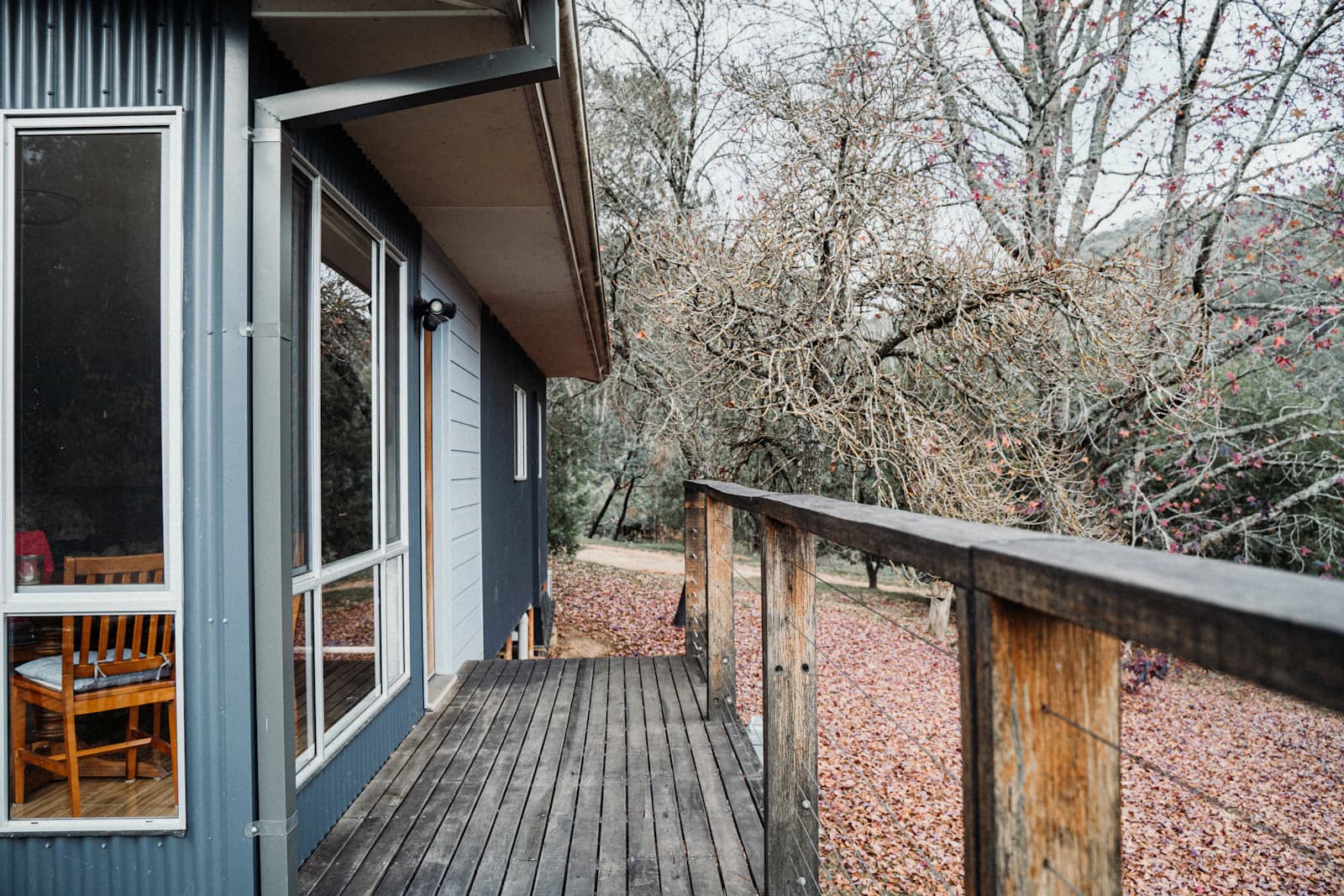
- Condition. A clean, solid, safe deck adds value; a graying, wobbly one is a liability buyers deduct for.
- Proportion & flow. A deck sized to the house and connected to the kitchen/living space reads as real living area. An oversized deck on a small home doesn't add proportional value.
- Safety & code. Sound railings, proper stairs and permitted work reassure buyers and inspectors — un-permitted decks can stall a sale.
- Function. Shade, seating zones, lighting and a grill/dining area make the space feel usable, not just present.
Build for resale (without overbuilding)
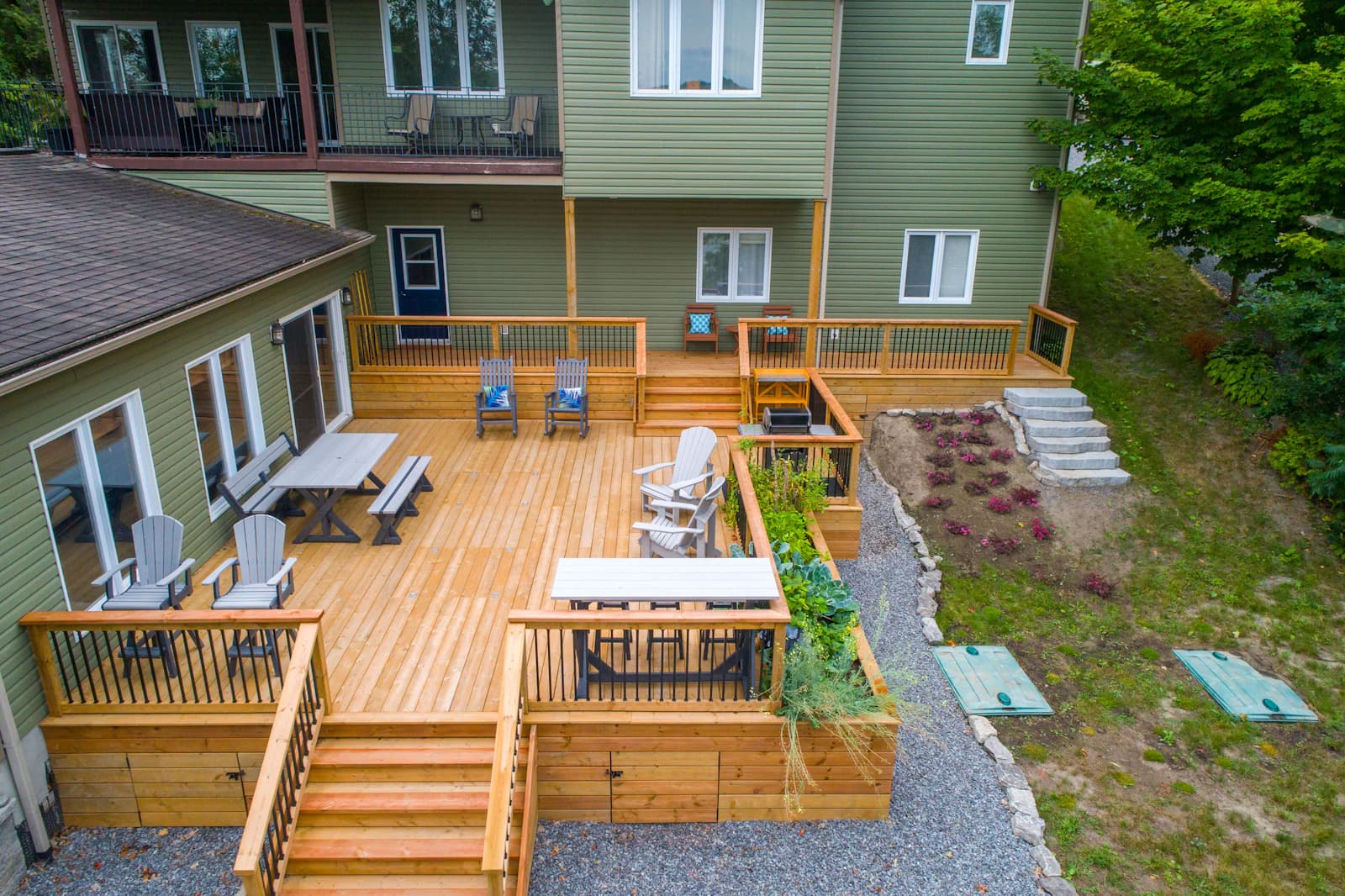
- Right-size it. Match the deck to the home's footprint and price tier — don't put a $40k deck on a starter home.
- Permit the work. Pull the permit — un-permitted additions can derail closing and appraisal.
- Keep it neutral. Classic colors and clean railings appeal to the widest buyer pool.
- Maintain it. A weekend of cleaning and sealing before listing can lift a wood deck's contribution more than any upgrade.
Frequently asked questions
Does adding a deck increase home value?
Yes, though rarely by as much as it costs. A deck adds usable living space at a fraction of the price per square foot of interior space, which is why it consistently appears near the top of outdoor projects by return. National remodeling data has historically shown a new wood deck recouping roughly 50 to 65% of its build cost at resale. The number people miss is the second effect: a well-kept deck helps a house sell faster, and time on market has its own cost in carrying payments and price reductions. So the honest framing is not that a deck pays for itself — it does not — but that it returns a meaningful share of the money and improves sellability at the same time. Few backyard projects do both, and that combination is what makes a deck a reasonable expenditure even on a house you plan to sell.
Do wood or composite decks have better ROI?
Wood usually shows the higher percentage, and composite often produces the better sale. The arithmetic is straightforward: wood costs less to build, so recouping a similar dollar amount returns a larger share of a smaller number. That is why ROI tables tend to favour wood. What the percentage does not capture is condition risk at the point of sale. A wood deck that has not been stained for three years looks tired in photographs and invites a buyer to price in work, while a composite deck of the same age looks essentially new and asks nothing of the next owner. If you are selling within a couple of years and the deck already exists, spend on cleaning and staining rather than replacing. If you are building now and selling later, wood returns a better percentage and composite carries less risk of showing badly on the day it matters.
How much value does a deck actually add to a house?
There is no fixed figure, and any source quoting one precisely is guessing. Expect to recoup roughly half to two-thirds of the build cost, with three variables mattering more than the material. Market: in regions where outdoor living is a year-round expectation, decks appraise better than in regions where the season is short. Proportion: a deck sized in keeping with the house and the yard reads as part of the home, while an oversized one reads as a maintenance liability and can subtract from the impression even as it adds square footage. Condition: an appraiser and a buyer are both looking at whether the deck needs work, not at what it cost. The most reliable way to protect the value is unglamorous — keep it clean, keep it safe, and keep the railing and stairs tight.
Does an un-permitted deck hurt resale?
It can, and the damage usually lands at the worst possible moment. An un-permitted deck may fail a pre-sale inspection, complicate the appraisal because the square footage cannot be counted as permitted improvement, and in some jurisdictions trigger an order to bring the structure up to code or remove it. Buyers' lenders can decline to fund against an unpermitted structure. Even where none of that happens, the disclosure alone gives a buyer a reason to negotiate. The permit itself is one of the cheapest lines on a deck project — typically 1 to 2% of the build — and what it buys is an inspector checking the ledger connection and footing depth, which are the two things that actually fail. Building to code and pulling the permit protects both the deck and its value; discovering the omission during a sale protects neither.
What adds the most deck value for the money?
Condition and right-sizing, in that order, and both are cheaper than upgrading materials. A clean, structurally sound deck with tight railings and stairs that meet code reads as an asset; the same deck grey and springy reads as a repair bill, regardless of what it is made of. Right-sizing is the second lever: a deck proportioned to the house and flowing naturally from the interior living space adds more per dollar than one that is simply larger, because buyers value how the space works rather than its square footage. What adds least per dollar is premium material on a deck nobody can see the point of — an expensive board on an awkwardly placed platform does not recover its premium. If the budget is limited before a sale, spend it on cleaning, fastener tightening and a fresh coat rather than on an upgrade.
Related calculators
Related guides
Get matched
Want 2–3 free quotes for this exact deck?
We'll send your plan to vetted local builders. Free, no obligation.