The 25-Year Deck Cost — Total Cost of Ownership
Upfront price is only the down payment. Over 25 years, maintenance and replacement flip the ranking — here's the real lifetime math on every decking material.
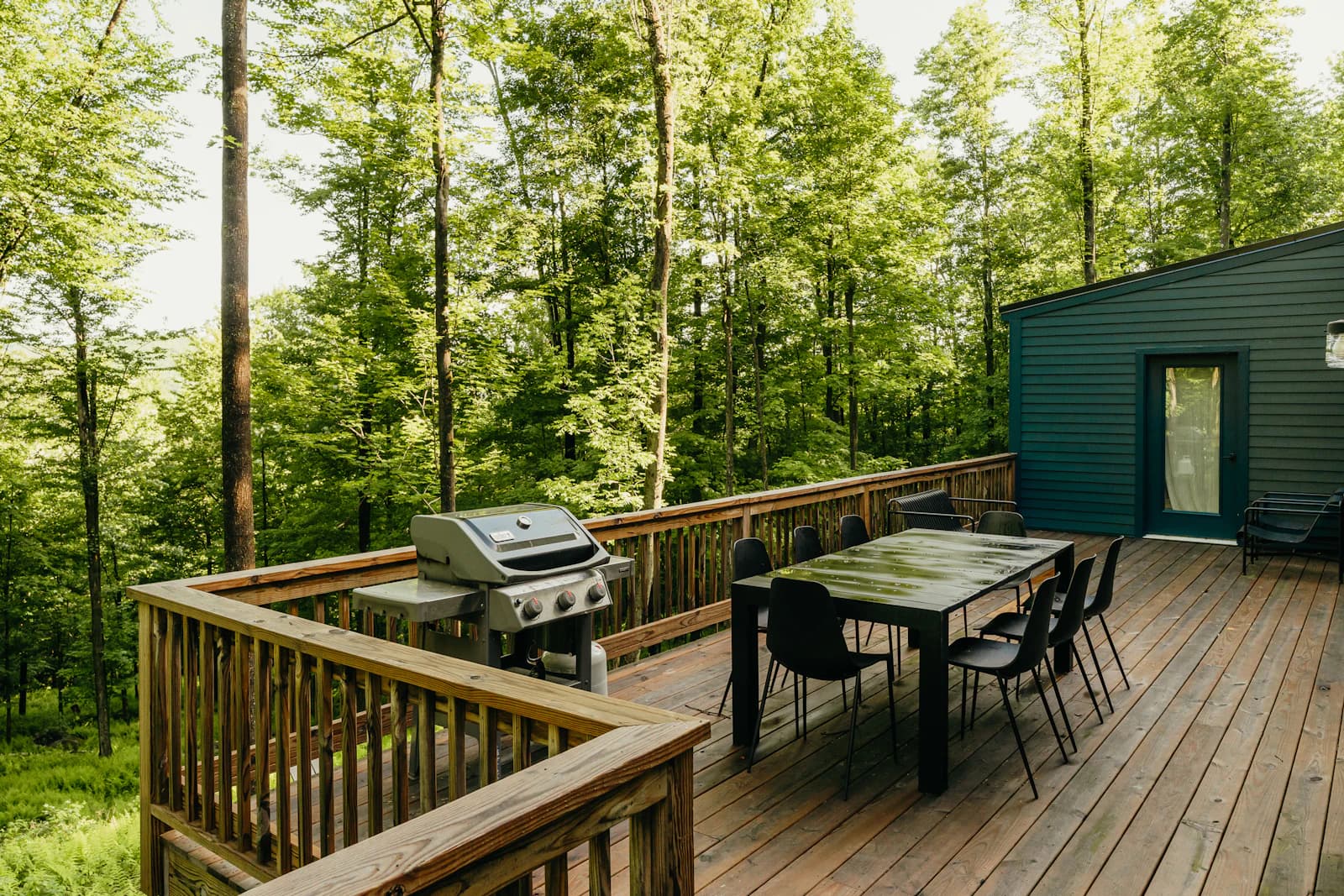
Almost everyone shops a deck on upfront price, and almost everyone is optimizing the wrong number. A pressure-treated deck is the cheapest to build and one of the most expensive to own, because it needs re-staining every couple of years and usually gets replaced once inside a 25-year window. Composite costs more on day one and less over the life. This guide does the 25-year math — purchase, maintenance, and replacement — so you can see which material is actually cheapest for the time you'll own the deck, not just the day you build it.
The three costs of owning a deck
Total cost of ownership has three parts, and shoppers usually see only the first:
- Upfront — materials + labor to build it. The number everyone compares.
- Maintenance — staining, sealing, washing, board replacement, year after year.
- Replacement — when the surface reaches end of life and gets torn off and redone.
Lifespan and maintenance by material
| Material | Service life | Annual upkeep | Upkeep task |
|---|---|---|---|
| Pressure-treated wood | 10–15 yr | ~$0.45 / sqft / yr | Re-stain every ~2 yr |
| Western red cedar | ~20–25 yr | ~$0.35 / sqft / yr | Re-stain every ~3 yr |
| Composite (capped) | 25–30 yr | ~$0.05 / sqft / yr | Wash only |
| PVC (capped polymer) | 30+ yr | ~$0.05 / sqft / yr | Wash only |
On a 320 sqft deck, PT upkeep at $0.45/sqft/yr is about $144 every year — roughly $3,600 over 25 years just in stain and labor. Composite at $0.05/sqft/yr is about $16/year, or ~$400 over the same period. That ~$3,200 maintenance gap is the heart of the lifetime math.
The replacement penalty
Service life is the second lever — how fast a wood species decays in exterior use is documented in the USDA Forest Products Laboratory Wood Handbook. If a PT surface lasts ~12 years, a 25-year horizon means you build it, then tear off and rebuild the surface once — paying for boards and labor a second time, plus demolition of the old surface.
- PT wood: plan on one mid-life surface replacement within 25 years.
- Cedar: borderline — may reach ~22 years with diligent maintenance, may not.
- Composite / PVC: typically one surface for the full 25+ years; framing outlasts the surface either way.
A 25-year side-by-side
Illustrative 320 sqft deck, ranked by lifetime cost rather than upfront. Exact numbers depend on your region and labor — run the calculator — but the pattern holds everywhere:
| Material | Upfront | 25-yr maintenance | Replacements | Lifetime rank |
|---|---|---|---|---|
| PT wood | Lowest | Highest (~$3,600) | ~1 surface rebuild | Often most expensive to own |
| Cedar | Low–mid | High (~$2,800) | 0–1 | Middle |
| Composite | High | Lowest (~$400) | 0 | Usually cheapest to own |
| PVC | Highest | Lowest (~$400) | 0 | Cheapest near water / longest life |
Composite (backed by manufacturer 25–50-year warranties) typically wins the 25-year number for most homeowners; PVC wins around pools and the coast where moisture is brutal; PT wins only if you genuinely plan to own the deck a short time or you enjoy the staining ritual.
When the cheap deck is the right deck
Lifetime cost isn't the only consideration. PT wood is the right call when:
- You're selling within a few years — you won't be around for the maintenance years or the replacement.
- Cash upfront is the binding constraint — the cheapest deck you can build now beats the better deck you can't afford.
- It's a small or low deck where the absolute maintenance dollars are tiny.
- You actively want to re-stain — some owners enjoy it and like changing the color.
Frequently asked questions
Is composite decking cheaper than wood over time?
For most owners, yes, once maintenance and replacement are in the calculation. The three costs of owning a deck are the build, the upkeep and the eventual replacement, and shoppers routinely compare only the first. Composite costs more on day one and then asks for washing at about $0.05 per square foot a year, roughly $16 annually on a 320 square foot deck, or about $400 across 25 years. Pressure-treated is cheap to build and then wants re-staining every couple of years at about $0.45 per square foot, roughly $144 a year or $3,600 over the same period, and its surface typically reaches end of life inside the window and gets rebuilt once. That $3,200 maintenance gap plus one surface replacement is what inverts the ranking. The exception is a short holding period, where you simply never reach the years that make composite cheaper.
How long does a pressure-treated deck last?
About 10 to 15 years for the walking surface with regular staining, and materially less if the staining slips. The framing is a different question and usually outlives the boards: ground-contact-rated joists and beams that stay dry and ventilated can go well beyond that, which is why a pressure-treated deck rebuild is normally a surface replacement rather than a demolition to the footings. That distinction matters for budgeting, because replacing boards on sound framing is far cheaper than starting again. Plan on one such replacement inside a 25-year horizon, and remember it costs more than the boards: you are paying to tear off the old surface, dispose of it, and pay labour a second time. Keeping the surface sealed and the framing ventilated is what pushes a pressure-treated deck toward the top of that 10 to 15 year range rather than the bottom.
What's the cheapest deck material to own long-term?
Capped composite, for most homeowners. It is expensive to build and then almost free to keep: washing only, at about $0.05 per square foot a year, with a 25 to 30 year service life and no mid-life surface replacement. Across a 25-year horizon on a 320 square foot deck that combination usually produces the lowest total of any material here. PVC is comparable and pulls ahead specifically around pools and on the coast, where constant moisture is hardest on anything with wood fibre in it, and it carries the longest service life at 30 years or more. Cedar sits in the middle: roughly 20 to 25 years with diligent upkeep at about $0.35 per square foot a year. Pressure-treated is cheapest only over a short horizon, which is a real scenario rather than a consolation.
How much does deck maintenance cost per year?
Roughly $0.45 per square foot a year for pressure-treated, about $0.35 for cedar and about $0.05 for composite or PVC. On a 320 square foot deck that is about $144 a year for pressure-treated against about $16 for composite, and the gap compounds every year you own it. Those figures cover materials rather than your weekends: pressure-treated needs cleaning, brightening and re-staining roughly every two years, cedar every three, and composite needs a wash with mild detergent. If you pay someone to do the staining rather than doing it yourself, the wood numbers rise substantially and the comparison tilts further. This single line is the heart of lifetime deck economics, because it is small enough to ignore in any one year and large enough over 25 to outweigh the difference in build cost between the materials.
Should I replace or refinish my old deck?
Start by inspecting the structure rather than the surface, because that is what decides it. If the framing, ledger, footings and fasteners are sound and only the boards look tired, refinishing or replacing the surface is far cheaper than a rebuild: sanding and re-staining timber, or laying new boards on the existing joists, keeps the expensive parts of the deck in service. If the ledger flashing has failed, the joists are soft where you probe them, or the footings have moved, replacement is the honest answer, because a new surface over compromised framing hides the problem rather than fixing it. One caveat applies when refitting composite onto old framing: the joist spacing must meet the manufacturer's requirement, 16 inches on centre parallel and 12 inches diagonal, so a deck framed at 24 inches needs additional joists before new boards go down.
Does total cost of ownership change which deck I should buy?
It should, and the deciding variable is how long you will own the deck rather than which material is theoretically best. Owning about five years, optimise for upfront price, and pressure-treated is a rational choice: you will not be there for the maintenance years or the replacement, and the cheapest deck you can build now beats the better one you cannot afford. Owning 15 years or more, optimise for lifetime cost, and composite or PVC almost always wins once maintenance and replacement are counted. The common and expensive mistake is the mismatch: buying pressure-treated to save on day one for a deck you intend to keep for two decades, then paying for it in stain every other year and a rebuild around year 12. Match the material to the time horizon and the arithmetic mostly takes care of itself.
Related calculators
Related guides
Get matched
Want 2–3 free quotes for this exact deck?
We'll send your plan to vetted local builders. Free, no obligation.