DeckMath
Freestanding · no ledger · permit-exempt math

Ground-Level Deck Calculator

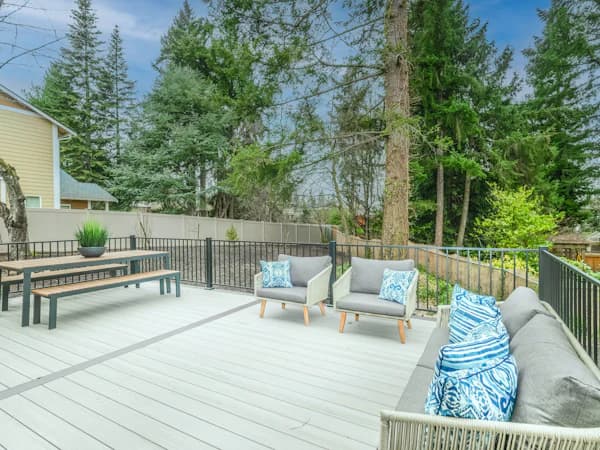
The freestanding low-platform deck estimator that does the permit + ventilation + foundation math first. Three foundation systems compete head-to-head — Dek-Block pre-cast piers (DIY classic, $8/each), Pylex/Krinner ground screws ($45/each, no-dig), or 12″ poured concrete piers ($35 + labor, permanent). Auto-flags IRC R105.2 permit exemption when your dimensions qualify (≤200 sqft + ≤30″ + no ledger). The killer feature is the ventilation gap check — at least 4″ of air space below the joist underside is required to prevent rot, and the math automatically detects when your deck height + joist size leaves insufficient clearance. 4 surface materials, 3 patterns, 4 vapor-barrier options, optional perimeter built-in bench. 2026-Q1 retail. Floating decks bypass frost-depth footing requirements in most jurisdictions.

2026-Q1 retailPermit-exempt check3 foundations4 surfacesVentilation gapFrost-bypassDIY-friendly
3·Foundation systems
4″ min·Ventilation gap
200 sqft·Permit threshold
DIY·Friendly tier

Inputs

Deck footprint

ft

ft

in

Area · 140 sq ft·✓ Permit-exempt (IRC R105.2)
%

140 sq ft ground-level deck on Dek-Block pier (DIY classic) with Pressure-treated 5/4 deck board. Permit-exempt. Project total $5,364 to $7,146.
Ground-level · Dek-Block pier (DIY classic)·Midwest
$5,364 – $7,146$38–$51 /sq ft installed
140 sq ft12 supports8″ above grade2x8 at 16″ OC Permit-exempt Vent FAIL
Supports
5 ft OC grid
Air gap
FAIL · < 4″
Materials
Low $1,228
Labor
1.00× region

Project advisories · IRC + ventilation

❌ Ventilation gap FAIL — 0″ air space (need 4″ minimum)

Industry rule of thumb

Joist depth 7.25″ + 1.5″ post cap = 8.75″ of vertical fill. With 8″ deck height, you're leaving 0″ for air movement under the joists. Joists rot in 8-12 years with insufficient ventilation, even pressure-treated. Either raise the deck or switch to a smaller joist size.

Permit-exempt · IRC R105.2 (140 sqft ≤ 200 + 8″ ≤ 30 + no ledger)

IRC R105.2

Your dimensions qualify for the standard IRC R105.2 work-exempt threshold — most jurisdictions don't require a permit. ALWAYS verify with your local building department before starting (HOAs + historic districts + floodplains may have stricter local amendments).

Vapor barrier · Landscape fabric (weed block)

Industry best practice

Prevents weed growth + light moisture barrier — $0.18/sqft. Standard for dek-block + ground-screw foundations.

Ground-level deck bill of materials

Pressure-treated 5/4 deck board
327 lf · 6% waste · 16″ joist OC
327 lf
$475
2x8 PT joists
8 × 14' at 16″ OC
8.0 joist
$347
4×4 PT posts (short cuts)
12 posts × ~6″ each
12 post
$264
Dek-Block pier (DIY classic)
12 supports at 5 ft OC
12 ea
$102
2-ply 2×8 PT beam (rim + center)
28 lf · 2-ply at perimeter + center beam
2.0 beam
$91
Landscape fabric (weed block)
140 sqft · Prevents weed growth + light moisture barrier — $0.18/sqft. Standard for dek-block + ground-screw foundations.
140 sqft
$25
LUS28 joist hangers
8 hangers · galvanized
8.0 ea
$16
Materials subtotal
$1,320

Pricing 2026-Q1 retail · regional labor multiplier baked in. Ground-level decks the cheapest tier per sqft because no ledger, no full footings, no stairs, no guard.

3-foundation comparison

same dims · same region

Dek-Block (DIY classic) vs ground screw (no-dig) vs poured pier (permanent). Same surface, same framing, same region. Switch by clicking a tile.

Project all-in

Materials
Pressure-treated 5/4 deck board · Dek-Block pier (DIY classic) · 12 supports
$1,228 – $1,320
Labor
Midwest · 1.00× · DIY-friendly tier
$4,136 – $5,296
Add-ons
Built-in bench (if selected)
$0 – $0
Soft costs
Permit waived · IRC R105.2 exempt
$0 – $0
Contingency reserve (8%)
Lower than elevated-deck contingency — fewer unknowns
$529
Project total (low – high)
No permit fees — IRC R105.2 exemption applies.
$5,364$7,146
IRC R105.2 — Work exempt from permit

Official IRC code text on the permit exemption thresholds (200 sqft, 30″, no ledger).

Floating Deck Calculator

Closely related — covers the broader floating-deck category with more surface options.

Need a deck above 30″?

This calc is sized for true ground-level decks. For elevated decks with proper footings + ledger + stairs + guards, use the Deck Cost Calculator.

Open

Estimates use 2026-Q1 national-median pricing. Always verify permit requirements with your local building department — IRC R105.2 exemption is the default but HOAs + historic districts may have stricter rules. DeckMath is not a substitute for a licensed builder or local permit authority.

How to use

Three steps. Permit-ready output.

  1. 01

    Confirm the deck qualifies as 'ground-level'

    Ground-level decks have no ledger attached to the house and sit 30″ or less above grade at the highest point. If either is false, this isn't a ground-level deck — switch to the Deck Cost Calculator or Multi-Level Deck Calculator. Decks above 30″ require IRC R312 guardrail, which changes the whole framing approach.

  2. 02

    Pick the foundation

    Dek-Block piers ($8.50 each) sit on compacted gravel — fastest, cheapest, DIY-friendly, only viable up to ~200 sqft. Ground screws ($45 each, Pylex/Krinner) replace dig-and-pour with a driven helical anchor — fast on uneven sites, works in any soil except solid rock. Poured concrete piers ($35 + labor) are 12″ deep sonotube-formed piers with post anchors — permanent, scales to any size, only foundation suitable for decks > 200 sqft.

  3. 03

    Pick the surface

    Pressure-treated 5/4 deck board ($3.20/sqft) is the cheapest and most widely stocked — needs re-seal every 1-2 years. Western red cedar ($5.80/sqft) is the warm-look choice — annual oil for 25-30 yr life. Capped composite ($7.50/sqft) is set-and-forget — 25-yr warranty, zero refinishing. Concrete pavers over a sleeper grid ($6.40/sqft) is a hybrid — fire-proof, zero maintenance, but heavier and limited to 24″ OC joist spacing.

  4. 04

    Pick the deck height above grade

    Critical input — drives the ventilation gap check. Default 8″ is the most common ground-level deck height. At 4″ height with a 2×8 joist, you have effectively NO air gap below the joist (joist depth 7.25″ + 1.5″ post cap = 8.75″, which is more than the 4″ height — joist would sit ON the ground). Math is auto-checked. The calculator flags FAIL if gap is under 4″.

  5. 05

    Pick the vapor barrier

    Landscape fabric ($0.18/sqft) is the standard pick — kills weeds + light moisture barrier. Crushed #57 stone over fabric ($0.85/sqft) gives better drainage on sloped or clay sites. Full concrete pad ($4.20/sqft) is overkill but eliminates rot risk entirely. 'None' (bare soil) is flagged as a warning — weeds and moisture rot joists in 3-5 years. Adding fabric later means lifting the deck.

  6. 06

    Pattern + joist size

    Parallel pattern allows 16″ OC joist spacing (cheaper, fewer joists). Diagonal pattern forces 12″ OC (more joists, more cost). Picture-frame allows 16″ OC. Joist size: 2×6 spans up to 8.8 ft at 16″ OC, 2×8 spans up to 11.7 ft. If your deck width exceeds the joist's max span, calculator flags it — you either need a center beam (already included) or larger joists.

  7. 07

    Check permit exemption

    Most jurisdictions exempt ground-level decks under 200 sqft + 30″ + no ledger from building permits (IRC R105.2). Calculator auto-flags when your dimensions qualify. Always verify with your local building department — some HOA-restricted neighborhoods and historic districts have stricter local amendments.

Material guide

Wood, composite, or PVC?

Three honest paths. Composite wins the 25-year math for most homeowners, wood wins on upfront cost, and PVC is unbeatable around water. Each card below answers in one glance — recalculate the bill of materials by clicking a brand in the picker above.

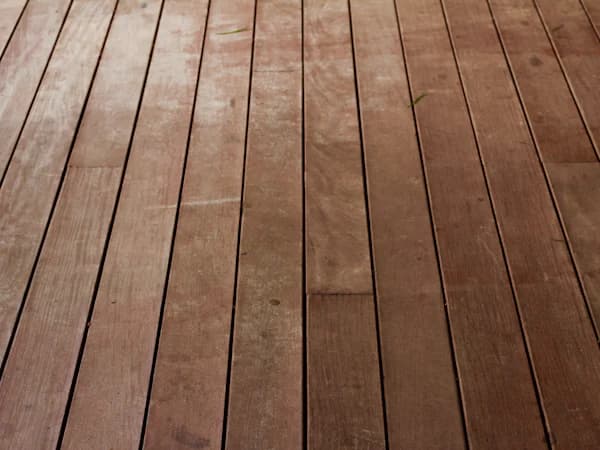
Pressure-treated wood

Best for · DIY budget builds
Upfront
$1.85 – $4.10/lf
Lifespan
10 – 15 years
Pros
  • Lowest upfront cost ($15–25/sq ft installed)
  • Universally available — Home Depot, Lowe's, lumberyards
  • Workable with standard fasteners and tools
Cons
  • Annual stain/seal needed (~$0.45/sq ft/yr)
  • Splinters, splits, and warps over time
  • Higher 25-year ownership cost than composite
Try in calculator: PT 2×6 or 5/4×6 deck boards
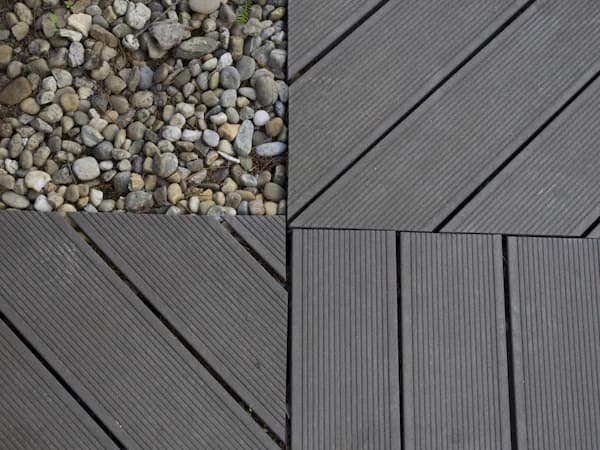
Composite

Best for · Most homeowners
Upfront
$3.20 – $6.40/lf
Lifespan
25 – 30 years (warranty)
Pros
  • Wash-only maintenance ($0.05/sq ft/yr)
  • Capped polymer surface resists stains, mold, fade
  • Lowest 25-year total cost for most builds
Cons
  • Higher upfront ($28–40/sq ft installed)
  • Hidden-fastener systems take 25% longer to install
  • Can run warm in direct sun (lighter colors mitigate)
Try in calculator: Trex Enhance · TimberTech Prime+ · Fiberon Good Life

PVC (capped polymer)

Best for · Pool & coastal decks
Upfront
$4.65 – $7.20/lf
Lifespan
30+ years (lifetime warranty)
Pros
  • Zero rot, zero mold — fully synthetic core
  • Coolest underfoot of the synthetics (mineral-core lines)
  • Best moisture and salt-spray performance
Cons
  • Highest upfront cost
  • Can move slightly more with temperature swings
  • Color palette narrower than composite
Try in calculator: TimberTech AZEK Vintage · Wolf Serenity

How we calculate

The math, fully transparent.

The Ground-Level Deck Calculator prices a freestanding low-platform deck across the three foundation systems people actually use: Dek-Block pre-cast piers ($8/each — DIY classic), Pylex / Krinner ground screws ($45/each — no digging), and 12″ poured concrete piers ($35 + labor — most permanent). Ground-level decks are special: with no ledger attached to the house and the walking surface ≤30″ above grade, most jurisdictions exempt them from a building permit entirely (under 200 sqft), and floating decks sidestep the frost-depth footing requirement that turns a $400 footing into a $1,200 footing in cold climates. The killer feature is the ventilation gap check — at least 4″ of air space below the joist underside is required to prevent rot. We auto-flag when your selected deck height + joist size produces less than 4″ of clearance. Four surfaces (PT, cedar, capped composite, concrete pavers over sleepers), three patterns (parallel, diagonal, picture-frame), four vapor-barrier options (landscape fabric, crushed gravel, concrete pad, or bare soil — flagged). Optional perimeter built-in bench. 2026-Q1 retail.

IRC references

  • IRC 2021 R105.2 — Work exempt from permit (decks ≤ 200 sqft, ≤ 30″ above grade, not attached to a dwelling)
  • IRC 2021 R507.6 — Deck joist spans by size + spacing
  • IRC 2021 R317.1 — Pressure-treated lumber for ground-contact applications
  • IRC 2021 R312 — Guards (only required above 30″ — most ground-level decks exempt)
  • IRC 2021 R403.1.4 — Frost protection (floating decks exempt in most jurisdictions)

Foundation pricing reflects 2026-Q1 Home Depot retail (Dek-Block, Pylex ground screws) + national-median concrete pier installer rates. Permit-exemption logic per IRC 2021 R105.2 thresholds (200 sqft + 30″ + no ledger). Joist span tables from IRC 2021 R507.6 for PT southern pine #2. Ventilation gap rule (4″ min, 6″ preferred) from deck-industry best practice — IRC doesn't specify but rot research consistently shows accelerated decay below 4″ of air movement.

Support count (foundation grid)
supports = ceil(width ÷ spacingFt + 1) × ceil(length ÷ spacingFt + 1)

Dek-Block grid is 5 ft OC, ground-screw + poured-pier is 6 ft OC. A 14×10 deck on dek-block: ceil(10/5+1) × ceil(14/5+1) = 3 × 4 = 12 supports. Ground screws: 3 × 3 = 9 supports.

Ventilation gap
gap = deck_height − joist_depth − post_cap (1.5″)

Air space between grade and joist underside. 2×8 joist (7.25″ depth) + 1.5″ post cap = 8.75″. Deck at 12″ above grade leaves 3.25″ gap — FAILS the 4″ minimum. Minimum-acceptable deck height with 2×8 joist + dek-block is ~13″ for 4″ gap, ~15″ for preferred 6″.

Joist max span (IRC R507.6)
2×6 / 2×8 max span per spacing (12″/16″/24″)

2×6 at 16″ OC spans 8.8 ft. 2×8 at 16″ OC spans 11.7 ft. 2×8 at 12″ OC spans 12.8 ft (gain from tighter spacing). Beyond max, you need a center beam (calculator adds one automatically for any width over 14 ft).

Permit exemption
exempt = area ≤ 200 sqft AND height ≤ 30″ AND no ledger

Standard IRC R105.2 exemption thresholds. Most US jurisdictions follow these. A 14×10 (140 sqft) deck at 8″ height with no ledger = EXEMPT. A 16×16 (256 sqft) at same height = permit required (over 200 sqft threshold).

Frost depth bypass
floating + non-frost-susceptible foundation = exempt from frost depth

Floating decks (dek-block + ground-screw) are not rigidly attached to a building, so seasonal frost heave is acceptable — the deck moves with the ground. Poured-pier foundations are rigidly framed and require either 12″ minimum depth (in most jurisdictions for low decks) or full frost depth (40-48″ in cold climates).

Save your plan

Don’t lose this estimate.

Your inputs are preserved in the URL — email it to yourself or copy the link so you can compare with contractor bids later. No account needed.

Frequently asked

Questions, answered.

Embed this calculator

One line. Any site. Free.

Drop the snippet into your contractor site, blog, or marketing page. Theme matches the parent site automatically.

<!-- Drop into any HTML, WordPress, Webflow, or contractor site -->
<script src="https://embed.deckmath.com/v1.js"
        data-deckmath-calc="ground-level-deck-calculator"
        data-theme="auto"
        async></script>