PVC vs Composite Decking: Cost & Which Wins 2026
Both skip the annual sealing wood demands — but they're not the same board. Here's how PVC and capped composite compare on cost, heat and longevity in 2026.
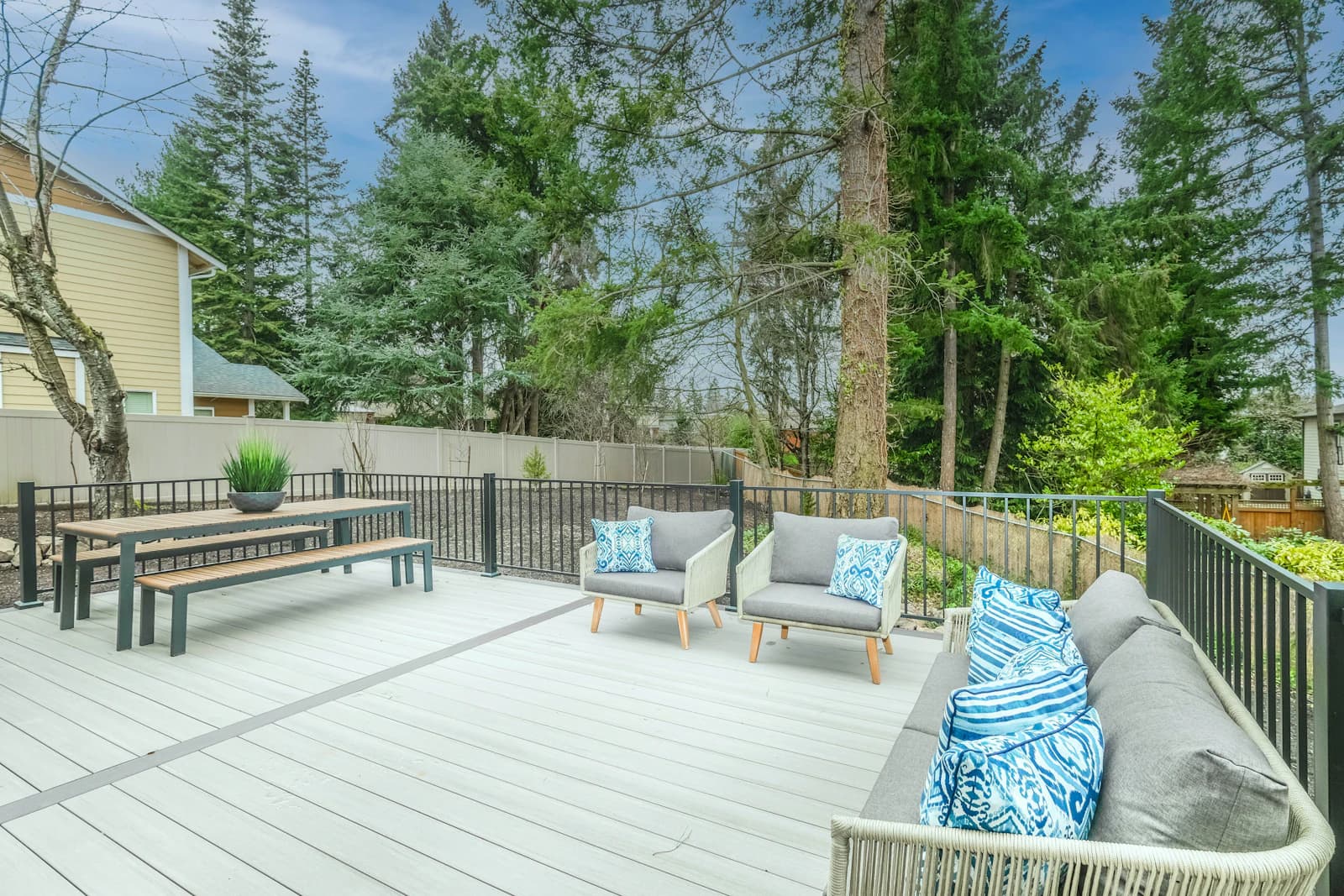
Capped composite decking (a wood-fiber core wrapped in plastic) runs about $8–$18 per square foot for boards; cellular PVC (all-plastic, no wood at all) runs about $12–$22. PVC is lighter, the most moisture- and stain-proof option, and often cooler in the newest lines — but composite usually looks more natural and costs less. Here's the full 2026 comparison so you can tell which premium board is actually worth it.
The 30-second answer
Pick capped composite for the best balance of natural looks and price, and for most standard backyard decks. Pick cellular PVC if the deck sees constant moisture (poolside, coastal, docks), if you want the lightest board and the strongest stain/mold resistance, or if you want the longest warranties. Price both on your exact deck with the composite deck cost calculator before you decide.
| Decking | Board cost / sq ft | Core | Best for |
|---|---|---|---|
| Capped composite | $8–$18 | Wood fiber + plastic cap | Most decks — value + natural look |
| Cellular PVC | $12–$22 | 100% plastic (no wood) | Wet/coastal sites, lightest weight |
What they actually are
Composite boards mix recycled wood flour and plastic; modern ones are *capped* — a hard polymer shell bonded around the core that resists fading, stains and moisture. Brands like Trex, TimberTech PRO and Fiberon lead here (see the Trex vs TimberTech comparison).
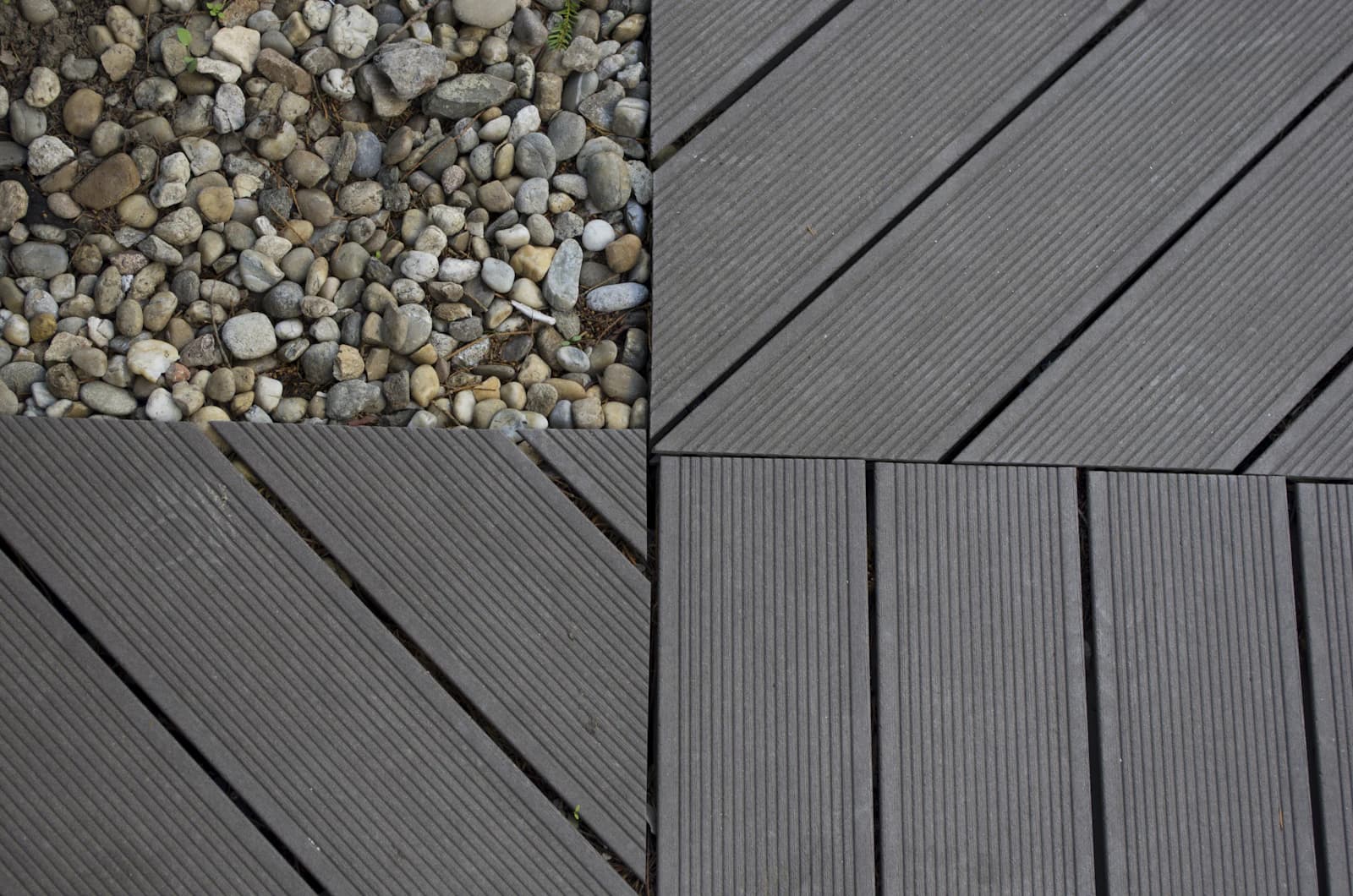
Cellular PVC has no wood at all — it's a foamed plastic board (TimberTech AZEK, Azek-style lines). Because there's no organic material for mold or moisture to feed on, PVC is the most rot- and stain-proof deck surface you can buy, and it's noticeably lighter to carry and fasten.
Cost per square foot in 2026
PVC sits at the top of the decking price ladder, with premium composite lines overlapping the low end of PVC. The surface is only part of the job — framing, railings and labor still dominate — so on a full project the PVC-vs-composite board gap is often a few hundred to a couple thousand dollars, not the whole budget.
| Line | Capped composite | Cellular PVC |
|---|---|---|
| Boards / sq ft | $8–$18 | $12–$22 |
| Installed / sq ft | $35–$60 | $45–$70 |
| 320 sq ft board line* | ~$2,600–$5,800 | ~$3,800–$7,000 |
*Board material only, not the full installed project. Run your real dimensions through the deck cost calculator for an all-in number including framing and labor.
Heat, moisture, weight and looks
- Heat underfoot: both get hotter than wood in full sun. Lighter colors help in either material; some newer PVC and capped-composite lines add heat-mitigating tech. Don't assume PVC is always cooler — it depends on the specific line and color.
- Moisture: PVC wins outright — zero wood means nothing for mold or rot to grow on. Capped composite is very good but its core can still matter at cut ends if not detailed well.
- Weight: PVC is lightest; composite is heavier than both PVC and wood (worth knowing for structure and for DIY handling).
- Looks: capped composite generally reads more like real wood; PVC has closed the gap but can look slightly more uniform.
Warranties and lifespan
Both categories carry long fade-and-stain warranties — commonly 25–30 years, with some flagship PVC and composite lines at 50 years or lifetime. Read the warranty for what it actually covers (fade/stain limits, labor, transferability). In practice a quality capped composite or PVC deck lasts decades with just soap-and-water cleaning — no sealing, ever, which is the whole point versus wood. The long-run math is in the 25-year cost-of-ownership guide.

Which should you build?
- Standard backyard deck, best value + natural look → capped composite.
- Poolside, coastal, dock, or maximum stain resistance → cellular PVC.
- Lightest board / easiest to handle → PVC.
- Tightest premium budget → composite (entry lines start below PVC).
If you're still deciding whether to go synthetic at all, compare the whole category against natural wood in the composite vs wood guide. For material-science details on capstock and cellular PVC, manufacturer resources like TimberTech and Trex publish specs worth skimming before you buy.
Frequently asked questions
Is PVC or composite decking better?
Neither wins outright — they fail differently, and that is what should decide it. Cellular PVC has no wood in it at all, so there is nothing for mould, rot or stains to feed on, and it is the lightest board of the two. That makes it the right answer beside a pool, within a few miles of saltwater, or anywhere the deck stays damp. Capped composite has a wood-fibre core wrapped in a plastic cap, which gives it more weight underfoot and a grain that reads more like timber, at $8 to $18 per square foot for boards against $12 to $22 for PVC. For a normal backyard deck in a temperate climate, composite is the better value and most buyers cannot tell the difference in year ten. For a deck that lives in water, PVC is worth the premium — not because it looks better, but because the thing that would eventually fail is not present in the board.
How much more does PVC decking cost than composite?
About 40 to 50% more at the board, and less than that once the whole project is counted. Boards run $12 to $22 per square foot for cellular PVC against $8 to $18 for capped composite. Installed — including labour but not the framing, footings and railing — the comparison is $45 to $70 per square foot for PVC against $35 to $60 for composite. On a 320 square foot deck, the board line alone is roughly $3,800 to $7,000 in PVC against $2,600 to $5,800 in composite, a difference of about $1,200. Note that the ranges overlap: a premium composite line costs more than an entry PVC one, so a blanket statement that PVC is the more expensive material is only true tier for tier. Compare the specific lines you are choosing between rather than the categories.
Does PVC decking get hot in the sun?
Yes. Every synthetic deck board absorbs and holds heat, and on a still summer afternoon in full sun both PVC and composite can be uncomfortable barefoot. The variable that matters most is not the material but the colour: a light board runs dramatically cooler than a dark one in the same line, and that single choice will do more for comfort than any brand decision. Some newer lines in both families add heat-mitigating cap technology, which helps at the margin and is usually restricted to a handful of colours. What is not true is the common claim that PVC is automatically cooler — it depends on the specific product and its colour. If barefoot comfort is a priority, choose light, plan for shade at the hours you actually use the deck, and treat any heat-mitigation claim as a tiebreaker rather than a solution.
Does PVC or composite decking last longer?
Both last decades with nothing more than soap-and-water cleaning, and both carry 25 to 50 year or lifetime fade-and-stain warranties, so the honest answer is that the difference is narrower than the marketing suggests. PVC has a genuine edge in pure moisture resistance because there is no wood in the board for mould or rot to work on, which shows up over time in wet, shaded or coastal locations rather than on a dry sunny deck. The more useful point is what actually retires a deck of either material: the framing underneath. That is still pressure-treated lumber with a 15 to 25 year service life in ground-contact conditions, still fastened with hardware that corrodes if it is the wrong grade, and still attached to the house by a ledger that is the most common structural failure on any deck. The board almost never goes first.
Can you use PVC or composite decking around a pool?
Yes, and this is the clearest case for choosing PVC. A pool deck deals with constant splashing, standing water, sunscreen and chlorine, and it is walked on barefoot — conditions that stress the one weakness of capped composite, which is that its protection lives in the cap while its core is wood fibre. Cellular PVC has no core to protect, so a scratch or a cut edge does not expose anything absorbent. It is also the lighter board, which matters on the raised framing pool decks often need. Composite works around pools too and plenty of them are built that way; it simply asks more of the installation, particularly sealed cut ends and good drainage. Whichever you choose, the framing rules do not change: same IRC span table, same footing depth below the local frost line, same corrosion-rated hardware.
Related calculators
Related guides
Get matched
Want 2–3 free quotes for this exact deck?
We'll send your plan to vetted local builders. Free, no obligation.