Deck Lighting Ideas & Cost 2026: Low-Voltage & Solar
The upgrade that makes a deck usable after dark — and one buyers love. Here's what deck lighting costs in 2026 and how to lay it out right.
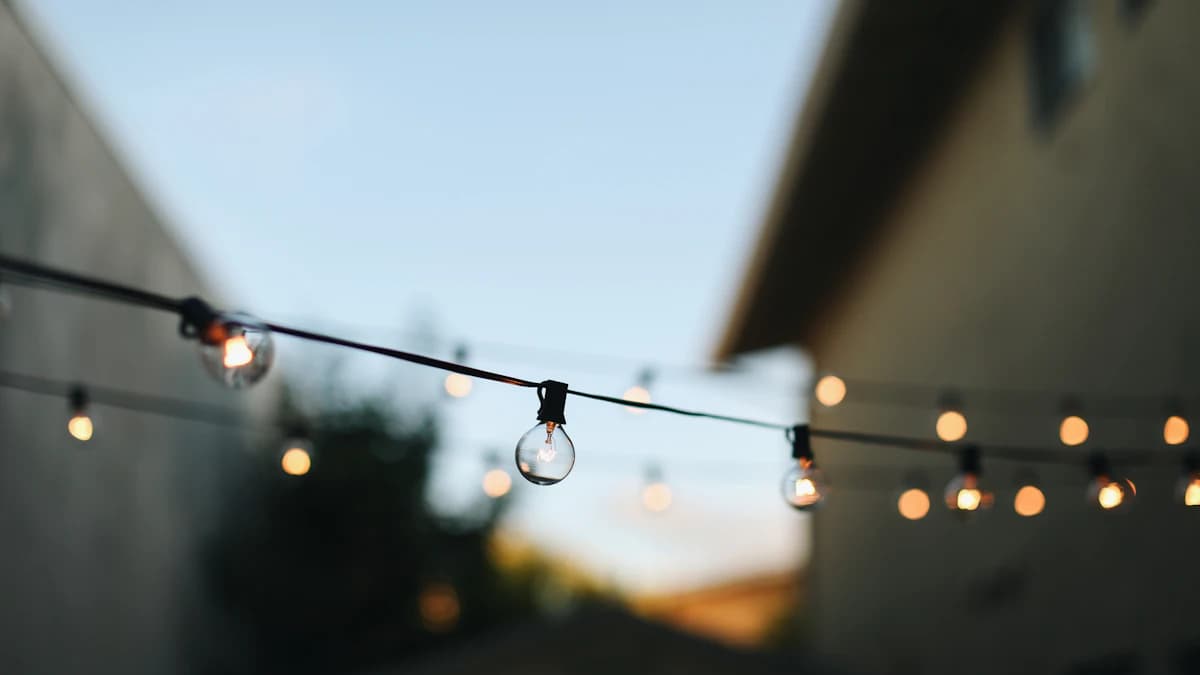
A typical deck lighting package runs roughly $300–$2,500 installed, depending on how many fixtures you add and whether you go solar (cheapest, ~$5–$25 a light), low-voltage LED (the sweet spot, ~$20–$60 a fixture plus a transformer), or recessed and hard-wired (priciest, best-looking). Below are the main lighting types, what each costs, where to place them, and how to keep it safe.
The 30-second answer
For most decks, low-voltage LED is the best value — safe (12V, no electrician needed for the low-voltage runs), durable, and dimmable — running about $300–$1,200 for a nicely lit deck. Go solar if you want the cheapest, wire-free option and can accept dimmer, weather-dependent light. Go recessed/hard-wired for the cleanest built-in look if you're already running power and want it to last decades. Price the whole deck first with the deck cost calculator, then add lighting as a line item.
| Type | Cost / light | Install | Best for |
|---|---|---|---|
| Solar cap/stair | $5–$25 | DIY, no wiring | Cheapest, easy, wire-free |
| Low-voltage LED | $20–$60 | DIY-friendly (12V) | Best all-round value |
| Recessed / hard-wired | $40–$120+ | Electrician for line-voltage | Cleanest built-in look |
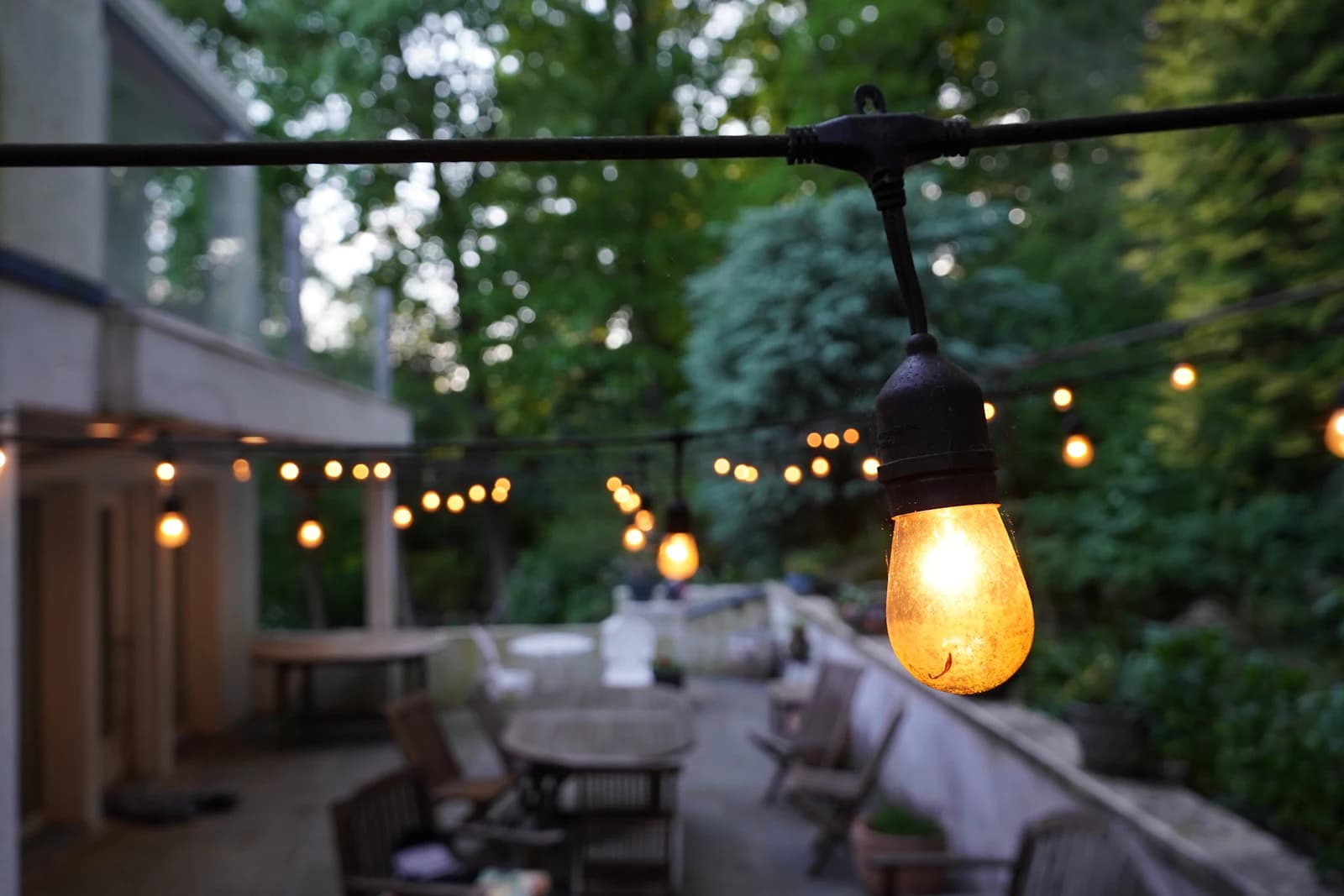
| String / festoon | $30–$150 / set | DIY | Ambiance over task light |
Lighting types, compared
Low-voltage LED (the workhorse)
A 12-volt transformer plugs into a GFCI outlet and feeds a run of small LED fixtures — post caps, stair lights, under-rail strips, recessed deck lights. It's bright enough for real task lighting, sips power, lasts for years, and because the deck-side wiring is only 12V it's genuinely DIY-friendly. This is where most homeowners land.
Solar (cheapest, wire-free)
Solar post caps and stair lights need no wiring at all — they charge by day and glow at night. The trade-off is brightness and consistency: output drops in shade, winter, and after cloudy days, and the batteries fade over a few seasons. Great for accent and safety on a budget, less so as your only light source.
Recessed & hard-wired (premium look)
Recessed lights set flush into stair risers, floors and railing posts for a clean, built-in look, while hard-wired line-voltage fixtures (sconces, overheads) throw the most light. Both usually want a licensed electrician for the 120V work and any new circuit — factor that labor in.
Where to put the lights
Good deck lighting is layered: a little task light where you need to see, accent light for mood, and safety light on every change of level.
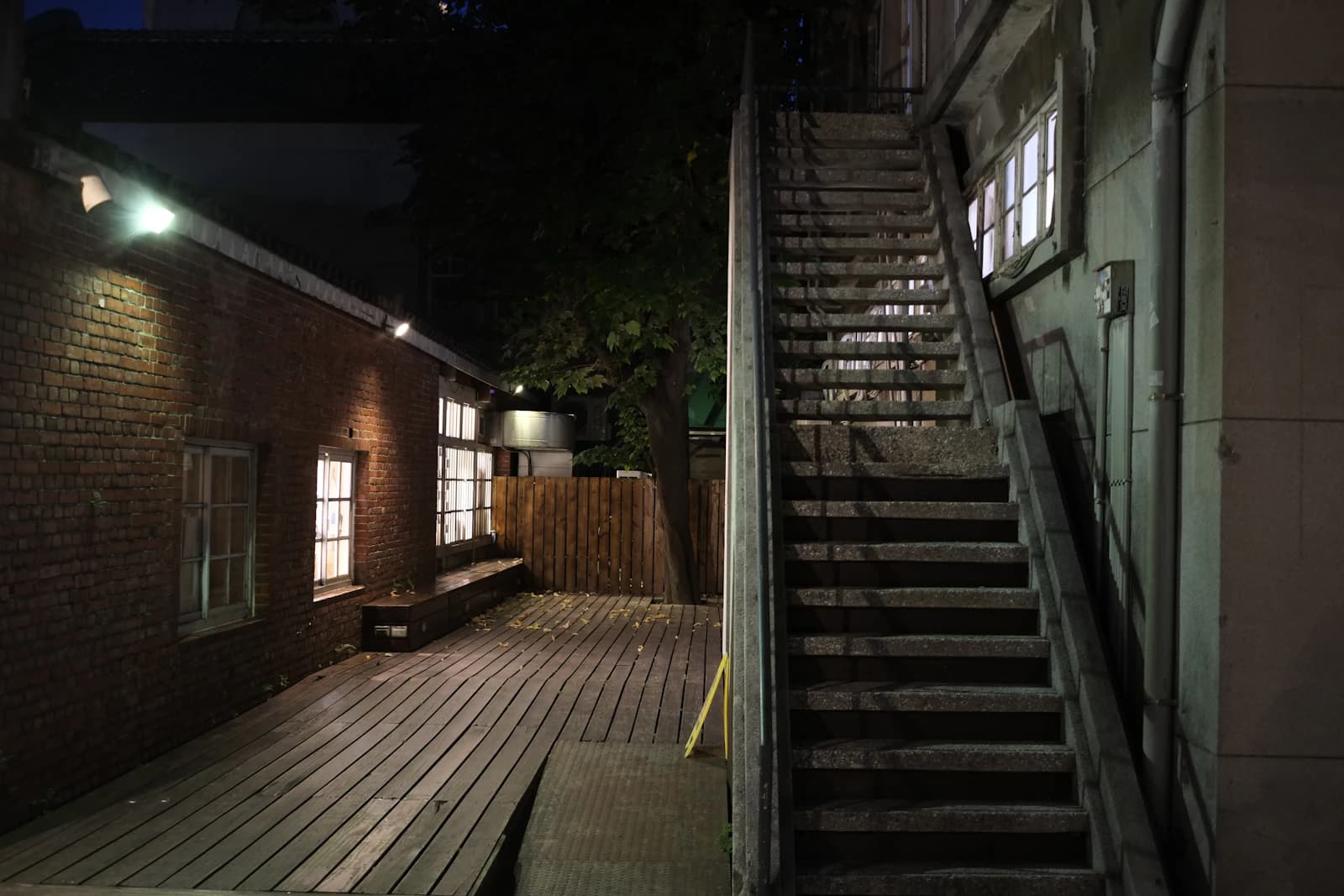
- Stairs (non-negotiable): light every stair run — riser lights or a light at the top and bottom. This is safety, and some jurisdictions expect stairs to be illuminated. See the deck stairs code guide.
- Railings & posts: post-cap lights and under-rail strips define the deck edge and prevent missteps.
- Task zones: brighter light over the grill, outdoor kitchen, and dining table.
- Ambiance: string lights overhead or down-lights in a pergola for warmth without glare.
Cost, power and safety
- Budget: a simple solar accent setup can be under $150; a layered low-voltage deck runs $300–$1,200; recessed/hard-wired with an electrician can reach $1,500–$2,500+.
- Power source: any outdoor receptacle feeding lighting should be GFCI-protected. New line-voltage circuits and fixtures are electrician + permit territory.
- Controls: add a timer, photocell, or smart plug so lights come on at dusk automatically; dimmers extend LED life and set the mood.
- Heat & rating: use fixtures rated for wet/outdoor locations; LEDs run cool and won't scorch composite or wood.
Frequently asked questions
How much does deck lighting cost?
Roughly $300 to $2,500 installed, and which end you land at is decided by the technology rather than the deck. Solar caps and stair lights cost $5 to $25 each and need no wiring at all, so a simple accent setup can come in under $150. Low-voltage LED fixtures run $20 to $60 each plus a transformer, which puts a properly layered deck at $300 to $1,200 and is where most homeowners end up. Recessed and hard-wired fixtures cost $40 to $120 or more each and add an electrician's labour for the 120-volt work, which is how a package reaches $1,500 to $2,500 and beyond. String or festoon sets sit alongside all of these at $30 to $150 per set. Price the deck first and treat lighting as its own line item, since it is one of the easier things to scale up or down late in planning.
What is the best type of deck lighting?
Low-voltage LED, for most decks and by a clear margin. A 12-volt transformer plugs into a GFCI outlet and feeds a run of small fixtures, post caps, stair lights, under-rail strips and recessed floor lights, which is bright enough for genuine task lighting, dimmable, long-lived and cheap to run. Because everything on the deck side is 12 volts, it is also properly DIY-friendly, which removes the electrician from the budget. Solar is the cheapest and simplest option and is a reasonable choice for accent and safety lighting, provided you accept dimmer and less consistent output. Recessed and hard-wired fixtures give the cleanest built-in look and the most light, and make sense if you are already running power for another reason. The deciding question is usually whether you want to involve an electrician at all.
Do I need an electrician for deck lighting?
Not for low-voltage or solar. Solar fixtures have no wiring whatsoever, and 12-volt systems are exempt from most of the requirements that govern household circuits, which is a large part of why they dominate deck lighting. The transformer simply plugs into an existing outdoor receptacle, and that receptacle must be GFCI-protected. You do need a licensed electrician for any 120-volt line-voltage fixtures, for a new circuit, or for adding an exterior outlet, and that work normally requires its own permit at about $50 to $150 on top of the building permit. The planning point is timing rather than cost: wiring is far easier to run while the deck framing is open, so decide before the boards go down. If you are undecided, have chases or conduit left in place for later.
Where should deck lights be placed?
Think in three layers, starting with safety. Stairs come first and are effectively non-negotiable: light every stair run, either with riser lights at each step or at minimum a light at the top and bottom, since this is where falls happen and some jurisdictions expect stairs to be illuminated. Next, define the edges. Post-cap lights and under-rail strips mark where the deck ends, which prevents missteps in the dark and does most of the visual work in photographs. Then add task light where you actually need to see, meaning over the grill, an outdoor kitchen or the dining table, at a higher output than the ambient layer. Finally, add ambiance with string lights overhead or down-lights in a pergola, which provide warmth without glare. Add a timer or photocell so the safety layers come on at dusk without anyone remembering to switch them.
Is solar deck lighting bright enough?
For accent and edge marking, yes. For task lighting, no. Solar fixtures charge during the day and discharge at night, so their output depends on conditions you do not control: a shaded deck, a run of cloudy days or short winter daylight all reduce brightness and runtime, usually at exactly the time of year you most want lighting in the early evening. Batteries also fade over a few seasons and are not always replaceable, so treat solar fixtures as having a shorter service life than a wired system. Where they shine is cost and simplicity, at $5 to $25 per light with no wiring, transformer or outlet required, which makes them ideal for a rental, a low deck or a first pass at lighting. If you want reliable light over a grill or a table, run low-voltage LED to that zone and leave solar for the accents.
Related calculators
Related guides
Get matched
Want 2–3 free quotes for this exact deck?
We'll send your plan to vetted local builders. Free, no obligation.