Deck Cost Breakdown 2026 — Line by Line
The complete line-item breakdown for 5 deck builds — from a $9K budget pressure-treated to a $35K luxury PVC build with aluminum railing and integrated lighting.
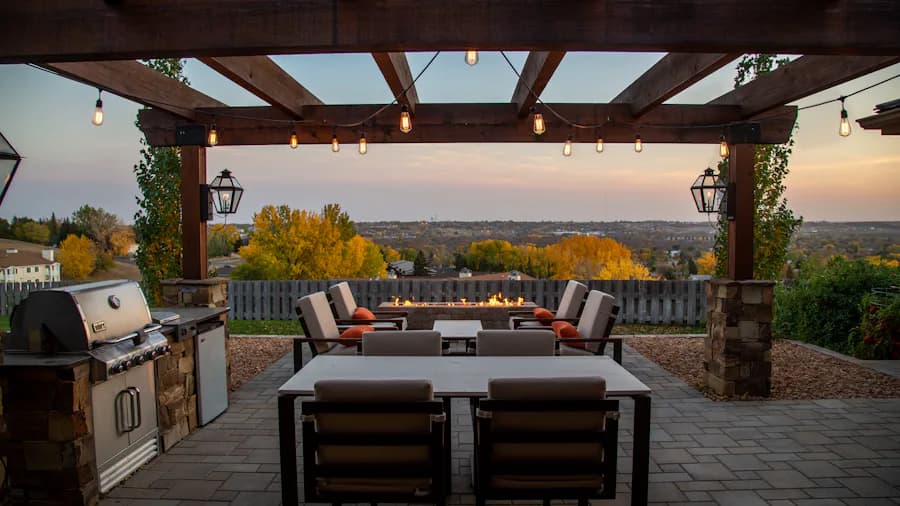
Lumping deck cost into a single $/sqft number hides where 80% of the budget actually goes. This guide breaks down a 16×20 (320 sqft) deck across 5 finish tiers, showing every line item: decking material, framing, hardware, labor, railing, stairs, permit, demo, lighting, and contingency. The dollar deltas between tiers are concrete, the labor portion is the biggest variable, and the hidden costs (permits, demo, contingency) add 15-25% to even the cheapest build.
Build 1: Budget pressure-treated, ground-level
16×20 PT 5/4×6 deck, 24″ off grade, 4 stairs, NO railing required, ledger-attached. Easy site access, southern Indiana (Midwest 1.00× labor). The cheapest realistic deck build in 2026:
| Line item | Detail | Cost |
|---|---|---|
| PT 5/4×6 decking | 320 sqft × $1.95/lf retail × 1.07 waste | $1,800 |
| Framing (joists, beams, posts) | 2×10 PT joists 16" o.c. + 2-ply 2×10 beams + 6×6 posts | $1,400 |
| Hardware (hangers, post bases, lateral anchor) | Simpson LUS210 + ABU66Z + DTT2Z | $420 |
| Concrete (4 footings, 24" deep × 12" dia) | 4 cu ft × $6.50/cu ft pre-mix | $110 |
| Fasteners (deck screws + ring-shank) | $0.22/sqft × 320 sqft | $70 |
| Stairs (4 risers, 36" wide) | Stringers + treads + landing pad | $580 |
| Demo (existing deck) | Not included | $0 |
| Permit fee | Suburban Midwest | $175 |
| Labor (install) | 320 sqft × $25 baseline × 1.00× region | $5,800 |
| Contingency (10%) | Reserve | $1,030 |
| TOTAL | Budget PT, ground level, no railing | $11,385 |
Per-sqft installed: $35.5/sqft. Materials are 30%, labor is 51%, hardware/fasteners are 5%, soft costs are 14%.
Build 2: Mid-tier cedar, 36" off grade, with railing
16×20 cedar 5/4×6 deck, 36″ off grade, 4 stairs, perimeter railing (wood baluster), ledger-attached. Easy site access, suburban Pennsylvania (Northeast 1.22× labor):
| Line item | Detail | Cost |
|---|---|---|
| Cedar 5/4×6 decking | 320 sqft × $3.40/lf × 1.07 waste | $3,150 |
| Framing | 2×10 PT same as above | $1,400 |
| Hardware | Same as Build 1 | $420 |
| Concrete (4 footings, 36" deep) | 6 cu ft × $6.50 | $170 |
| Fasteners | Stainless deck screws (cedar), $0.30/sqft | $95 |
| Stairs (4 risers) | Slightly upgraded materials | $680 |
| Wood-baluster railing | 36 lf × $32/lf installed | $1,150 |
| Permit fee | Suburban PA | $220 |
| Labor | 320 × $40 × 1.22× Northeast | $15,600 |
| Contingency (10%) | Reserve | $2,290 |
| TOTAL | Mid-tier cedar, 36" railing, NE labor | $25,175 |
Per-sqft installed: $78/sqft. Cedar's premium ($1,350) is small vs the labor multiplier upcharge (Northeast 1.22× adds $4,100). Railing is the biggest scope addition ($1,150).
Build 3: Premium mid-composite, with composite railing
16×20 Trex Enhance Naturals deck, 36″ off grade, 4 stairs, Trex Transcend Railing (composite), ledger-attached. Easy site access, Atlanta GA (South 0.92× labor):
| Line item | Detail | Cost |
|---|---|---|
| Trex Enhance Naturals decking | 320 sqft × $3.80/lf × 1.07 waste | $3,520 |
| Trex Universal Hidden Fastener | 7 boxes × $89 (90 clips × ~50 sqft each) | $623 |
| Framing | Same as above | $1,400 |
| Hardware | Same as above | $420 |
| Concrete (4 footings, 12" deep frost) | 3 cu ft × $6.50 | $60 |
| Stairs (4 risers, composite tread) | Composite stair tread upgrade | $880 |
| Trex Transcend Railing | 36 lf × $95/lf installed | $3,420 |
| Permit fee | Atlanta metro | $220 |
| Labor | 320 × $50 × 1.25× composite × 0.92× South | $14,720 |
| Contingency (10%) | Reserve | $2,528 |
| TOTAL | Mid composite, 36" railing, South labor | $27,791 |
Per-sqft installed: $87/sqft. Composite materials premium ($1,720 over cedar) + premium railing ($2,270 over wood baluster) + composite labor multiplier (1.25×) — but Atlanta's 0.92× labor offsets some of that.
Build 4: Luxury PVC, aluminum railing, lighting
16×20 TimberTech AZEK Vintage deck, 60″ off grade, 6 stairs, Trex Signature aluminum railing, integrated DeckLighting, ledger-attached. Difficult access (slope), suburban Boston (Northeast 1.22× labor):
| Line item | Detail | Cost |
|---|---|---|
| TimberTech AZEK Vintage decking | 320 sqft × $7.20/lf × 1.07 waste | $6,665 |
| TimberTech CONCEALoc fasteners | 7 boxes × $89 | $623 |
| Framing (taller posts) | 2×10 PT joists + 6×6 PT longer posts | $1,800 |
| Hardware (extra tall posts) | Same plus longer post bases | $520 |
| Concrete (4 footings, 48" deep) | 8 cu ft × $6.50 | $185 |
| Stairs (6 risers, composite) | Premium stair package | $1,420 |
| Trex Signature aluminum railing | 36 lf × $188/lf installed | $6,768 |
| Trex DeckLighting (post-cap + step) | Kit + transformer + wiring | $1,420 |
| Demo (existing 16×16 deck) | 256 sqft × $5.50/sqft | $1,408 |
| Permit fee | Boston suburbs | $385 |
| Labor | 320 × $65 × 1.25× × 1.22× × 1.18× difficult | $30,160 |
| Contingency (10%) | Reserve | $5,140 |
| TOTAL | Luxury PVC, aluminum rail, lighting, demo, NE labor | $56,494 |
Per-sqft installed: $176/sqft — significantly above the luxury tier's $90-140 band because of difficult site access (1.18× multiplier), demo of existing deck, and integrated lighting. This is the high end of residential builds.
Build 5: Exotic Ipe, picture-frame pattern
16×20 Ipe deck, 30″ off grade, 4 stairs, no railing required (just under threshold), picture-frame pattern, ledger-attached. Easy access, Sonoma CA (West 1.28× labor):
| Line item | Detail | Cost |
|---|---|---|
| Ipe 5/4×6 decking | 320 sqft × $7.80/lf × 1.12 waste (picture-frame) | $7,860 |
| Stainless screws (predrilled) | $0.85/sqft (Ipe-grade SS screws) | $272 |
| Framing (12" o.c. for diagonal/pf) | Tightened joist spacing | $1,650 |
| Hardware | Same plus extra hangers (12" o.c.) | $520 |
| Concrete | 4 footings, 12" deep CA | $60 |
| Stairs (4 risers, Ipe tread) | Premium hardwood stairs | $1,200 |
| Permit fee | Sonoma County | $320 |
| Labor | 320 × $80 × 1.18× picture-frame × 1.28× West | $30,940 |
| Contingency (10%) | Reserve | $4,300 |
| TOTAL | Exotic Ipe, picture-frame, CA labor | $47,122 |
Per-sqft installed: $147/sqft — at the top of the exotic tier band. Ipe's hardness drives slow install speed (1.5-2× normal); picture-frame pattern adds 18% labor on top; West Coast adds 28%. Material is only 17% of total — labor is dominant in California Ipe builds.
Cost across the 5 builds
| Build | Tier | Total cost | $/sqft | Materials % | Labor % |
|---|---|---|---|---|---|
| 1 | Budget PT | $11,385 | $35.5 | 30% | 51% |
| 2 | Mid cedar + rail | $25,175 | $78.7 | 26% | 62% |
| 3 | Mid composite + rail | $27,791 | $87.0 | 31% | 53% |
| 4 | Luxury PVC + lighting | $56,494 | $176.5 | 29% | 53% |
| 5 | Exotic Ipe + picture-frame | $47,122 | $147.3 | 21% | 66% |
Labor is consistently 50-65% of total cost — the largest single variable in any deck build; regional labor rates track BLS carpenter wage data. Materials are 20-30%, anchored to the BLS Producer Price Index for lumber. The remainder is hardware, soft costs, and contingency.
Where to save money
If your contractor's bid feels high, here's where to negotiate:
- DIY install (saves 50-65% of total cost on a typical build) — biggest single lever
- Drop a tier (luxury → premium, premium → mid) — saves $5,000-15,000 with negligible 25-yr difference
- Skip the railing (only valid below 30″ deck height) — saves $1,500-7,000
- Parallel pattern instead of diagonal/herringbone — saves $3,500-7,500 in waste + labor + framing
- Pull the permit yourself — saves $50-150 contractor markup
- Shop materials direct at Home Depot Pro Desk — contractor markup on materials is typically 15-25%
- Skip integrated lighting — saves $1,200-2,000 + electrical permit
Frequently asked questions
What's the most expensive line item?
Labour, and it is not close. Across all five reference builds in this guide it runs 51 to 66 percent of the total, which on a $20,000 deck is $10,000 to $13,000 before a single board is bought. The budget pressure-treated build carries $5,800 of labour against $11,385 total; the Ipe build carries $30,940 against $47,122, where material is only 21 percent of the bill. That ordering explains most of what looks strange in deck pricing. Upgrading decking material moves the total less than people expect, while anything that slows the crew moves it a lot: a difficult sloped site, a demolition, a pattern that needs mitred cuts, or a dense hardwood that has to be pre-drilled. It also explains why doing the install yourself is the single largest saving available, and why the same specification costs wildly different amounts in different metros.
Are these prices accurate?
They are reference figures built from published sources, and a real bid should land within about 15 percent of them in any US market. The inputs are RSMeans 2026 first-quarter residential indices, Home Depot Pro Desk and Lowe's Pro first-quarter retail pricing, and national median job data. Labour rates track Bureau of Labor Statistics carpenter wage data by region, and lumber pricing is anchored to the BLS Producer Price Index, which is why the regional multipliers in this guide are specific numbers rather than adjectives. Two caveats keep them honest. Lumber is a commodity and can move faster than any published guide, so a figure six months old may understate or overstate materially. And a reference build assumes easy site access and no surprises; the moment a slope, a demolition or rotten house framing enters the job, the labour line moves further than any material line can.
Where does my money actually go?
On a typical build the split is labour 50 to 65 percent, materials 20 to 30 percent, hardware and fasteners 3 to 5 percent, soft costs such as permit, demolition and design 5 to 15 percent, and a 10 percent contingency reserve. Decking boards are usually the second largest line rather than the first, which contradicts how most homeowners imagine a deck bill. The budget pressure-treated build in this guide is 30 percent materials and 51 percent labour; the Ipe build is 21 percent materials and 66 percent labour, because the wood is slow to work. Hardware is small in percentage terms but not optional: hangers, post bases and the lateral-load anchor are what the framing inspection checks. The useful takeaway is to interrogate the labour line and the scope that drives it, since that is where a bid is really made.
Can I save by buying materials myself?
Usually yes, by roughly the contractor's markup, which typically runs 15 to 25 percent on materials. On a $5,000 materials line that is $750 to $1,250, achieved by buying direct from a pro desk and having it delivered to the site. Several conditions decide whether it is worth doing. Some contractors accept owner-supplied materials only with a small labour surcharge, which claws back part of the saving. Some decline entirely, because they lose the ability to warrant what they installed and to swap defective boards quickly. You also take on the risks they normally absorb: ordering the right quantity including waste for your pattern, storing the material safely, and handling shortfalls mid-build, which on composite can mean a colour-batch mismatch. Agree it in writing before signing, and use a calculator to derive the quantity rather than guessing, because a second delivery erodes the saving fast.
Why is my contingency 10%?
Because that is the residential standard reserve for scope nobody can see at quoting time, and deck projects have a specific set of those surprises. Removing siding at the ledger can reveal rotted house framing that has to be repaired before anything attaches to it. Footing excavation can hit a utility line, a buried slab or rock, all of which change the dig. Site conditions can force a machine where a shovel was assumed. And mid-project upgrade decisions, especially on railing and lighting, are common enough to budget for. Ten percent covers the ordinary cases: the reference builds in this guide carry $1,030 on the budget deck and $5,140 on the luxury one. For a full demolition and rebuild, raise it to 15 percent, because opening up an old structure is where the largest unknowns live.
How does region affect cost?
Through labour, which is both the largest line item and the most variable one. The multipliers used here are Midwest 1.00 as the baseline, South 0.92, Northeast 1.22 and West Coast 1.28. On a 320 square foot mid-composite build with about $14,000 of baseline labour, that is roughly a $5,000 swing between Atlanta near $12,900 and the San Francisco Bay Area near $17,900 for identical work. Materials are close to national, with the notable exception of species that ship long distances, such as cedar being dearer in the Midwest and East. Two practical consequences follow. First, a national per-square-foot figure is a sanity check and never a quote. Second, region can outweigh specification: the cedar build in this guide costs more per square foot than it would in composite elsewhere, because a 1.22 labour multiplier adds more than the material upgrade does.
Should I get a quote from multiple contractors?
Always, and three is the minimum worth acting on. Bid spread on a $20,000 deck routinely runs from about $15,000 to $25,000 across three contractors for what looks like the same job, and reading why they differ is more valuable than the lowest number. Compare scope line by line: who is pulling the permit, who is disposing of the old deck, what railing system is specified, how many stair risers, what fastener system, and whether contingency is included or excluded. A low bid with items missing is not a low bid. As a default, take the middle bidder with the strongest references, or the highest if they hold a manufacturer certification such as Trex Pro Platinum, TimberTech AZEK Pro or Fiberon Pro, since those installations often carry enhanced warranty terms that the cheaper bid cannot offer.
Is integrated lighting worth $1,200-2,000?
It depends entirely on when you use the deck. If you will be out there three or more evenings a week, post-cap and stair lighting changes what the space is for and effectively extends the usable day, which is why it appears in the luxury reference build. If the deck is a daytime feature, it is $1,200 to $2,000 plus, in some jurisdictions, an electrical permit, spent on something you will rarely switch on. The timing argument matters more than the money. Lighting is far cheaper to install while the deck is open, because wiring runs behind fascia and through posts that are about to be closed up, so retrofitting later costs more and looks worse. If you are undecided, the sensible middle path is to have the installer run conduit or leave wire chases during the build and add fixtures later.
What's the cheapest realistic deck build?
A ground-level pressure-treated deck under 24 inches high, laid in a parallel pattern, with no railing required, no demolition, easy site access and your own labour. That specification comes in around $13 to $25 per square foot all in, which on 320 square feet is roughly $4,200 to $8,000 for materials, tools and the permit. The professional version of the same deck, the budget build in this guide, totals $11,385 at $35.50 per square foot, and the difference is almost entirely the $5,800 labour line. Every element of that specification is doing work: staying under the railing height threshold saves $1,500 to $7,000, parallel boards keep waste at 7 percent and avoid tighter joist spacing, and easy access keeps the crew or you from carrying everything uphill. Do not economise on the permit; it is $175 to $385 and it is not optional.
Should I skip the contingency reserve?
No, unless the contract explicitly makes the contractor responsible for all unforeseen scope, which is rare and is priced into a higher fixed number when offered. Most fixed-price deck contracts exclude hidden conditions by name, which means the risk sits with you whether or not you set money aside for it. Without a reserve there are only two outcomes when something is found behind the siding or in the ground: a change order you have to fund at short notice, or a stalled project. Ten percent is the residential standard and 15 percent is appropriate when demolition is involved, because opening an existing structure is where the real unknowns are. Treat the reserve as part of the budget rather than as an optional extra, and if the job runs clean, you have simply underspent, which is the only pleasant surprise available in construction.
Related calculators
Related guides
Get matched
Want 2–3 free quotes for this exact deck?
We'll send your plan to vetted local builders. Free, no obligation.