DeckMath
Comparison · keep framing or tear-down rebuild

Resurface vs Rebuild Calculator

Head-to-head deck resurface vs full rebuild — keep your existing framing (replace boards + railings + stairs) vs tear-down + new framing + new everything. The killer feature: framing-condition-driven recommendation. If your framing is excellent or good (5-25 yr decks usually qualify), resurface saves $35-50/sqft on framing labor + materials. If framing is marginal or poor (rot, soft joists, loose ledger), resurface is throwing money away — rebuild is the right call. 8 board materials × 4 framing conditions × 25-yr lifecycle model surfaces the long-term winner: resurfacing a marginal-framing deck saves money today but you'll rebuild in 8-10 yr anyway, while a clean rebuild now has a 25-50 yr horizon. State labor multiplier + permit cost (rebuild only) + optional new footings.

2026-Q1 retail25-yr lifecycle8 materials4 framing tiersFraming-driven decision
vs·Resurface or rebuild
25 yr·Lifecycle model
4·Framing conditions
8·Board materials

Inputs

Deck dimensions + age

sqft

yr

Resurface $9,790. Rebuild $16,999. Recommendation: resurface.
✓ Recommended: Resurface
$9,790save $7,209 vs other option · Good (minor weathering) framing
320 sqftTrex Enhance Naturals
Resurface
keep framing · new boards/rails
Rebuild
full tear-down + new everything
Today's savings
42.4% resurface wins
25-yr winner
rebuild wins lifecycle

Recommendation + advisories

✓ Recommended: Resurface

Framing-condition-driven decision

Resurface — sister 1-2 weak joists + reuse the rest. Save 60-80% vs rebuild.

Resurface: $9,790 · Rebuild: $16,999 · Δ $7,209 saved by resurfacing

Head-to-head cost

Resurface keeps your existing framing (reuses 90% of framing). Rebuild = full tear-down + new framing + new everything. Savings 42.4% vs rebuild.

Resurface
$9,790
Boards
Trex Enhance Naturals
$1,690
Railings
composite mid-tier
$2,576
Stairs
5 steps
$1,100
Partial demo
boards only
$576
Install labor
OH region
$3,848
Rebuild
$16,999
Framing material
joists + beams + posts
$2,400
Boards
Trex Enhance Naturals
$1,690
Railings
composite mid-tier
$2,576
Stairs
5 steps
$1,100
Full demo
tear-down + haul
$1,440
Labor
OH region
$7,368
Permit
rebuild only
$425

25-year lifecycle

Resurface now (lasts ~21 yr) + future rebuild: $31,038
Rebuild now (lasts 25+ yr, one project): $16,999
Lifecycle winner: REBUILD by $14,039

2026-Q1 retail. Framing condition is the most important variable — pour money into rotten framing and you'll rebuild in 5-8 yr anyway. Get a $400 professional structural inspection before committing to either path.

How to use

Three steps. Permit-ready output.

  1. 01

    Enter deck dimensions + age

    Total deck footprint in sqft. Current age helps frame the framing-condition expectation: 5-15 yr decks typically have excellent or good framing; 15-25 yr decks often marginal; 25+ yr decks usually poor.

  2. 02

    Assess framing condition (most important input)

    Excellent (looks new — no rot, no insect damage). Good (slight surface weathering, 90%+ reusable). Marginal (visible rot in 20-40% of framing). Poor (major rot, soft joists, loose ledger). This is the decisive variable: poor framing → rebuild required (calculator hard-locks resurface as not viable).

  3. 03

    Pick current + target deck-board material

    Current: what's on your deck now (PT pine, cedar, redwood, IPE, Trex, TimberTech, Fiberon). Target: what you want to install. Most users upgrade from old PT pine to composite (Trex Enhance the budget choice, TimberTech AZEK the premium PVC choice). Resurface lets you upgrade boards without rebuilding framing.

  4. 04

    Add railings + stairs + footings

    Include railings (usually yes — old wood railings rarely survive a board refresh). Include stairs + step count (3-8 typical). Include new footings only for rebuild path (usually NO — most rebuilds reuse existing footings unless inspector flags them, which adds ~$4.20/sqft).

  5. 05

    Pick state for regional labor

    Labor cost varies 30-80% by region. CA, NY, MA = +25-40% above national average. TX, OH, FL = baseline. AL, MS, KY = -10-15%. State multiplier applies to all labor lines.

  6. 06

    Read the head-to-head comparison + lifecycle

    Top of results shows both totals + savings vs rebuild + recommendation. Below: 25-yr lifecycle comparison. Resurface now + rebuild in 8-10 yr (if framing is marginal) often costs MORE than a clean rebuild now over 25 years. Resurface wins when framing is excellent/good AND target material has 25+ yr lifespan.

Material guide

Wood, composite, or PVC?

Three honest paths. Composite wins the 25-year math for most homeowners, wood wins on upfront cost, and PVC is unbeatable around water. Each card below answers in one glance — recalculate the bill of materials by clicking a brand in the picker above.

Pressure-treated wood

Best for · DIY budget builds
Upfront
$1.85 – $4.10/lf
Lifespan
10 – 15 years
Pros
  • Lowest upfront cost ($15–25/sq ft installed)
  • Universally available — Home Depot, Lowe's, lumberyards
  • Workable with standard fasteners and tools
Cons
  • Annual stain/seal needed (~$0.45/sq ft/yr)
  • Splinters, splits, and warps over time
  • Higher 25-year ownership cost than composite
Try in calculator: PT 2×6 or 5/4×6 deck boards
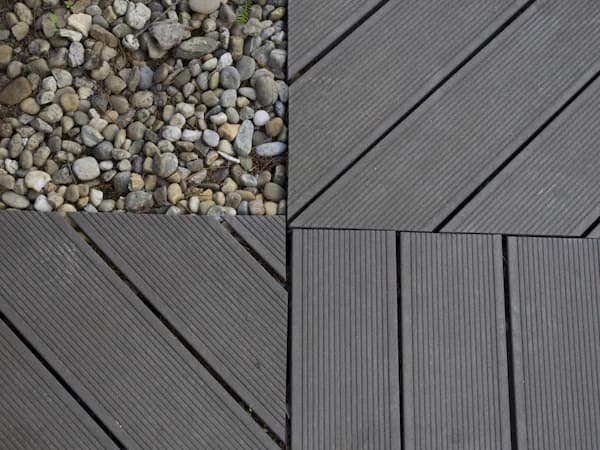
Composite

Best for · Most homeowners
Upfront
$3.20 – $6.40/lf
Lifespan
25 – 30 years (warranty)
Pros
  • Wash-only maintenance ($0.05/sq ft/yr)
  • Capped polymer surface resists stains, mold, fade
  • Lowest 25-year total cost for most builds
Cons
  • Higher upfront ($28–40/sq ft installed)
  • Hidden-fastener systems take 25% longer to install
  • Can run warm in direct sun (lighter colors mitigate)
Try in calculator: Trex Enhance · TimberTech Prime+ · Fiberon Good Life

PVC (capped polymer)

Best for · Pool & coastal decks
Upfront
$4.65 – $7.20/lf
Lifespan
30+ years (lifetime warranty)
Pros
  • Zero rot, zero mold — fully synthetic core
  • Coolest underfoot of the synthetics (mineral-core lines)
  • Best moisture and salt-spray performance
Cons
  • Highest upfront cost
  • Can move slightly more with temperature swings
  • Color palette narrower than composite
Try in calculator: TimberTech AZEK Vintage · Wolf Serenity

How we calculate

The math, fully transparent.

The Resurface vs Rebuild Calculator compares both options head-to-head with a 25-year lifecycle cost model. Resurface = keep your existing framing (joists + beams + posts + footings), replace boards + railings + stairs only. Rebuild = full tear-down + new framing + new boards + new everything. The killer feature: framing-condition-driven recommendation. If your framing is excellent or good (5-25 yr decks usually qualify), resurface saves $35-50/sqft on framing labor + materials. If framing is marginal or poor (rot, soft joists, loose ledger), resurface is throwing money away — rebuild is the right call. 8 board materials head-to-head (PT pine, cedar, redwood, IPE, Trex Enhance/Transcend, TimberTech AZEK PVC, Fiberon Sanctuary). State labor multiplier + permit cost (rebuild only) + optional new footings (rebuild). 25-yr lifecycle comparison surfaces the long-term winner: resurfacing a marginal-framing deck saves money today but you'll rebuild in 8-10 years anyway, while a clean rebuild now has a 25-50 yr horizon depending on material.

IRC references

  • IRC 2021 R507 — Deck framing requirements (rebuild triggers when framing fails)
  • IRC 2021 R102.7.1 — Existing structures must meet current code when renovated (resurface may trigger compliance updates)
  • Remodeling Magazine 2026 Cost vs Value — national medians for deck addition + renovation
  • Manufacturer board lifespan warranties (Trex 25-50 yr, AZEK 50-yr lifetime, IPE 30+ yr field)

National-median pricing per Remodeling Magazine 2026 Cost vs Value (deck addition + renovation). Framing material + labor costs from contractor surveys. Board pricing from Trex, TimberTech, Fiberon, Cabot, PT pine wholesale. 25-yr lifecycle inflation factor (+25% on future rebuild) calibrated to 5-yr historical construction cost index. Framing condition decision matrix from IRC R507 (when rebuild is mandatory per code).

Resurface cost
resurface = boards + railings + stairs + demo + labor

Keep existing framing. Replace boards (target $/lf × area × 1.65 lf/sqft), railings (perimeter × $36/lf), stairs ($220/step). Plus partial demo ($1.80/sqft — boards only) + install labor ($8/sqft). Skip framing material + framing labor (the big savers).

Rebuild cost
rebuild = framing + boards + railings + stairs + footings + demo + labor + permit

Full new deck. Adds framing materials ($7.50/sqft) + framing labor ($11/sqft) + full demo ($4.50/sqft) + permit ($425) + optional new footings ($4.20/sqft if added). Plus everything resurface includes. Rebuild typically costs 1.4-2× resurface.

25-year lifecycle cost
lifecycle = first_project + (future_project × 1.25 inflation)

Resurface path: if framing is good/excellent → resurface now lasts board lifespan (25-30 yr) → only one project in 25 yr. If framing is marginal → resurface now + rebuild at year 10 → two projects, second one costs 25% more due to inflation. Rebuild path: one project now, lasts 25+ yr (any modern material).

Recommendation logic
if (framing == poor) rebuild_required; else_if (savings < 20%) rebuild; else_if (lifecycle_savings > 0) resurface; else either

Poor framing always → rebuild. Otherwise: if resurface saves less than 20% (small savings rarely worth the headache + risk of hidden rot), rebuild. If 25-yr lifecycle is cheaper on resurface, resurface wins. Borderline → either is reasonable.

Save your plan

Don’t lose this estimate.

Your inputs are preserved in the URL — email it to yourself or copy the link so you can compare with contractor bids later. No account needed.

Frequently asked

Questions, answered.

Embed this calculator

One line. Any site. Free.

Drop the snippet into your contractor site, blog, or marketing page. Theme matches the parent site automatically.

<!-- Drop into any HTML, WordPress, Webflow, or contractor site -->
<script src="https://embed.deckmath.com/v1.js"
        data-deckmath-calc="resurface-vs-rebuild-calculator"
        data-theme="auto"
        async></script>